Gardening is in my blood. My parents have always had amazing gardens, both productive and ornamental and so have my grandparents. I’d love to say that gardening has been a lifelong passion. But truthfully, as a child, it was a love-hate relationship. One of our punishments for misbehaving was weeding the garden. I have memories of pulling up weeds, muttering angrily to myself, tears streaming down a dirt-streaked face.
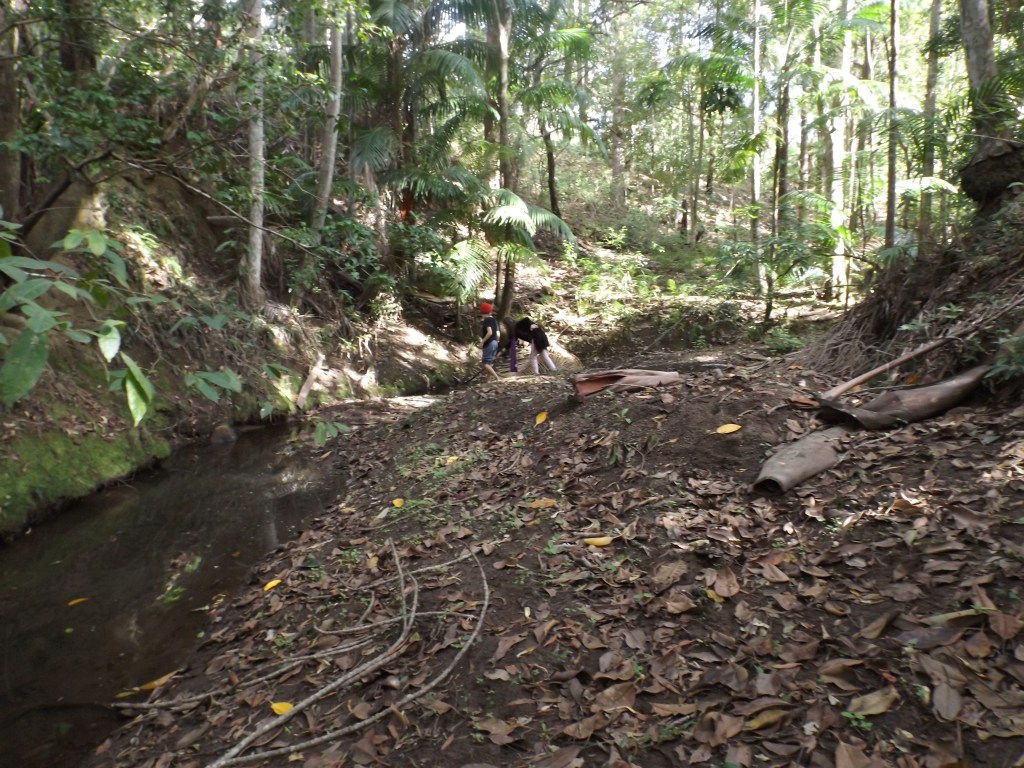
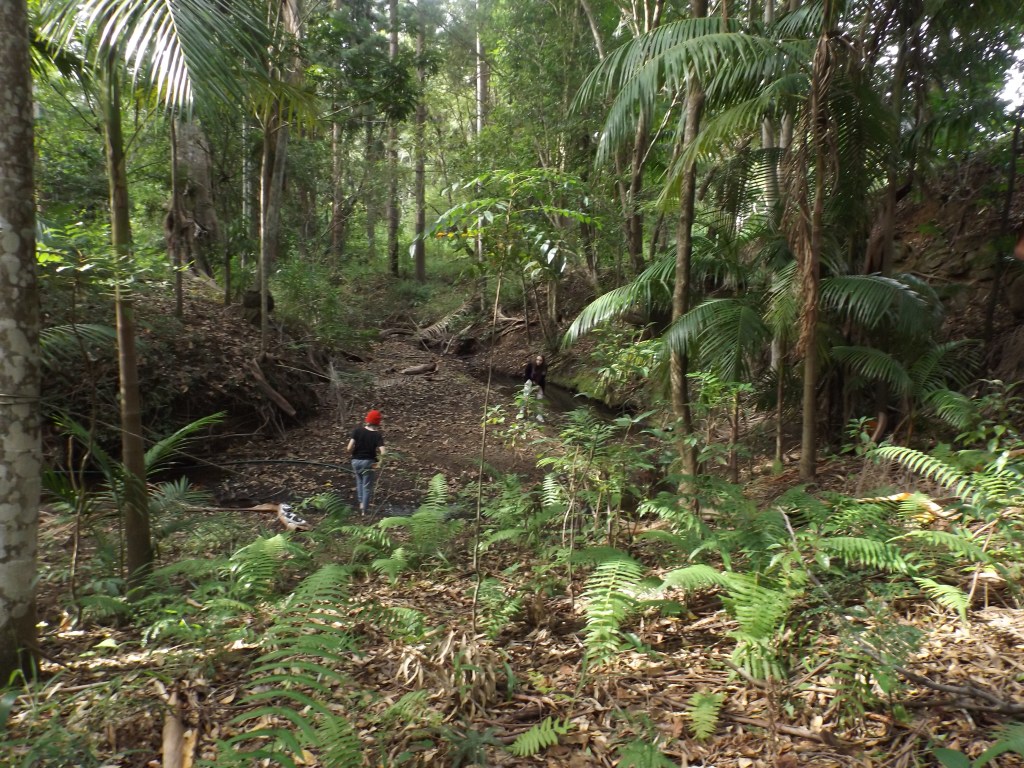
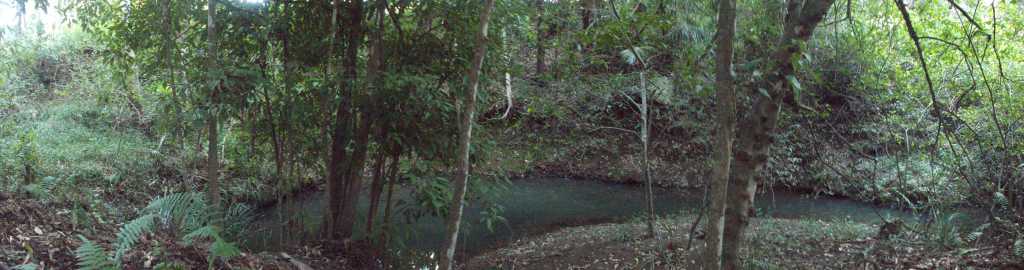
We’d go to weekend markets and Mum and Dad would stop at every single nursery stall, to collective groans from my sisters and I. We had purchased 15 acres of bare cow paddock with a creek. My parents meticulously chose trees native to the region and reestablished a stunning mini rainforest that became a haven to all kinds of wildlife.
But despite this early floral trauma, I also loved the magic of planting a seed and tending to it as it grew into a plant, producing delicious food or beautiful flowers. I dabbled in pot plants and small vege patches in my 20’s and 30’s with varying levels of success.
When Covid hit at the beginning of 2020, I got into gardening whole heartedly. Both to give myself something to do and to have fresh veges. I had no idea at the time just how much growth the garden would deliver to me.
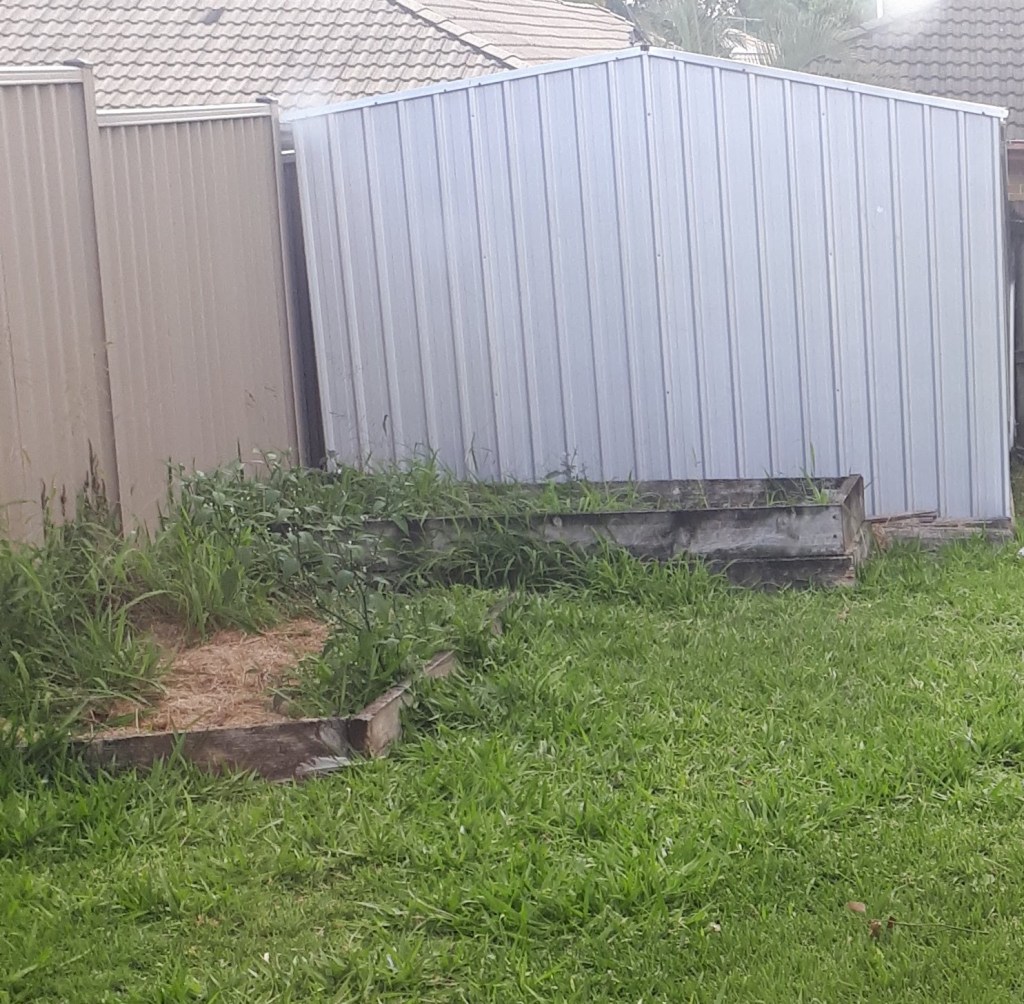

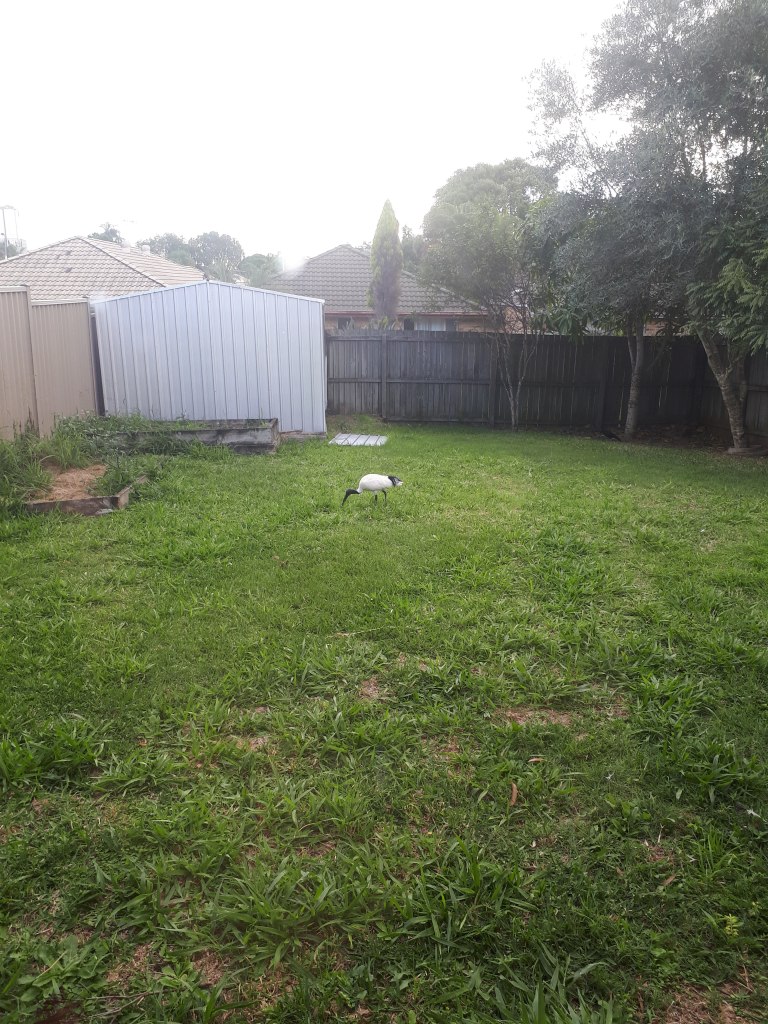
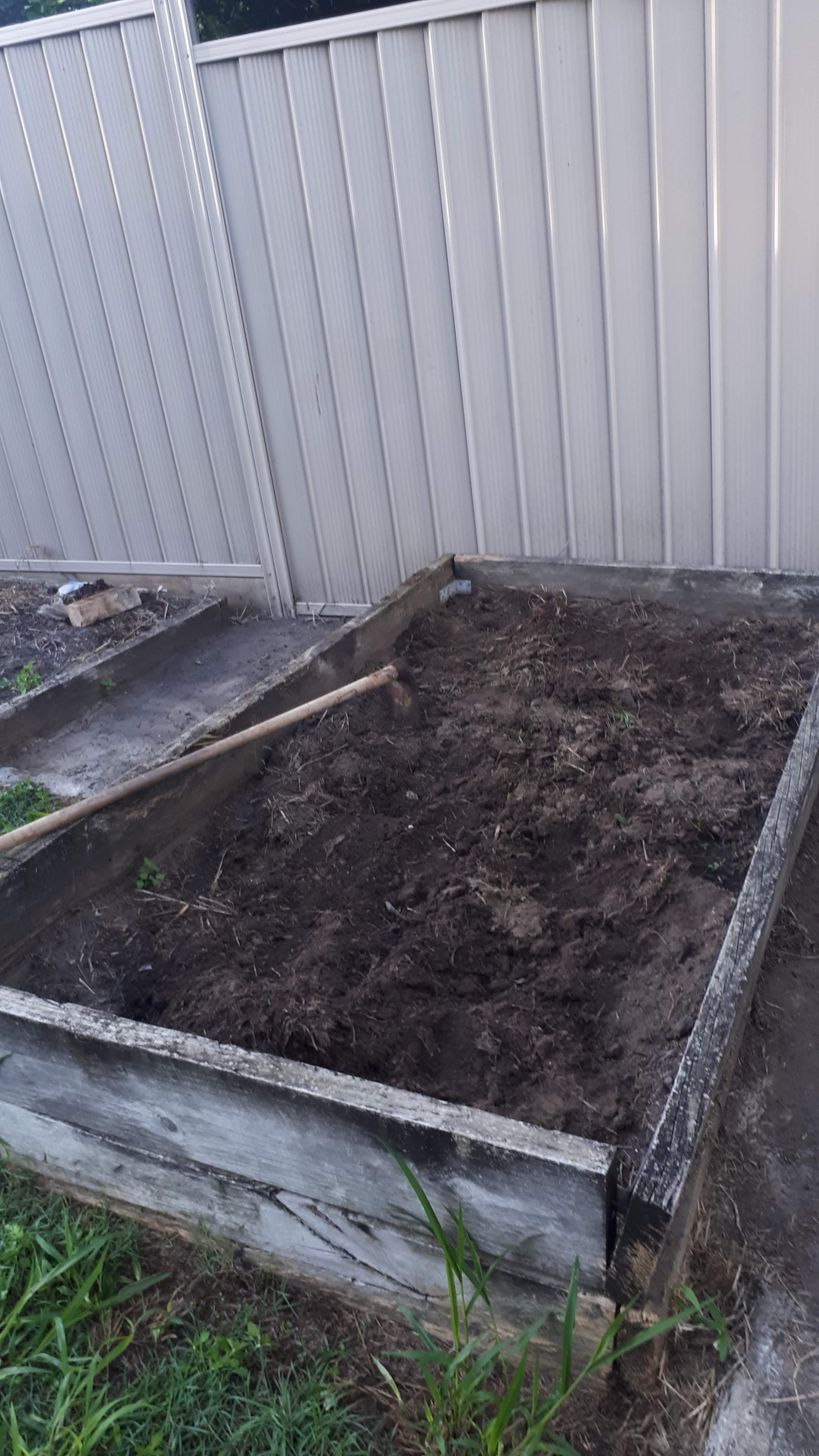
There were two weed filled, wooden bordered garden beds in the backyard of our rented house. So, I set to cleaning them up. I found it immensely therapeutic. Using all my strength to dig and pull out big clumps of grass. The satisfying rip as the earth yielded and the roots lost their grip in the soil.
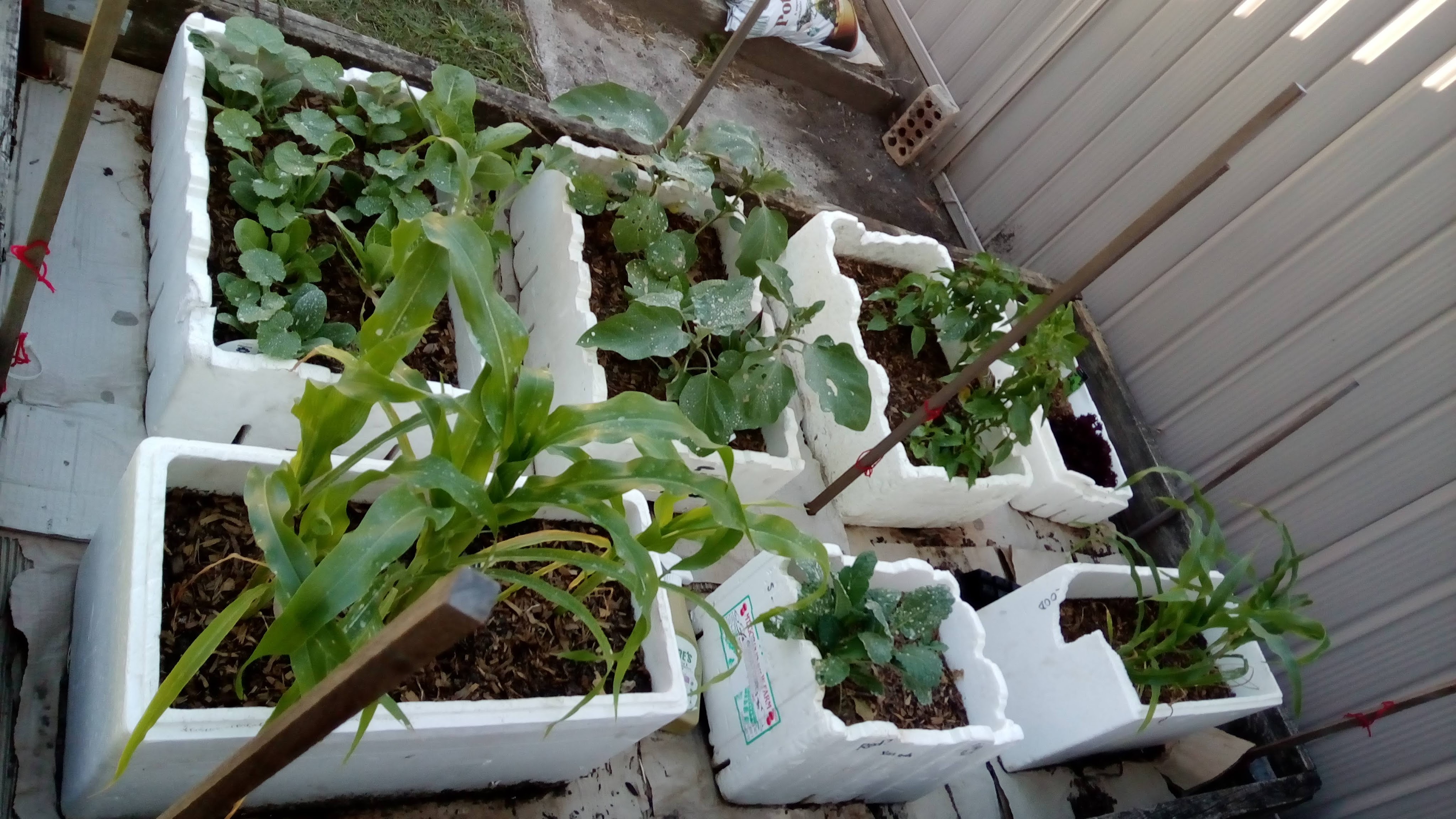
Living in a rented house, I didn’t want to put too much effort into planting in the beds and then have to leave them if our lease wasn’t renewed. So, I weeded the beds, put down cardboard to stop the weeds returning and put polystyrene boxes in the beds which I then planted in.
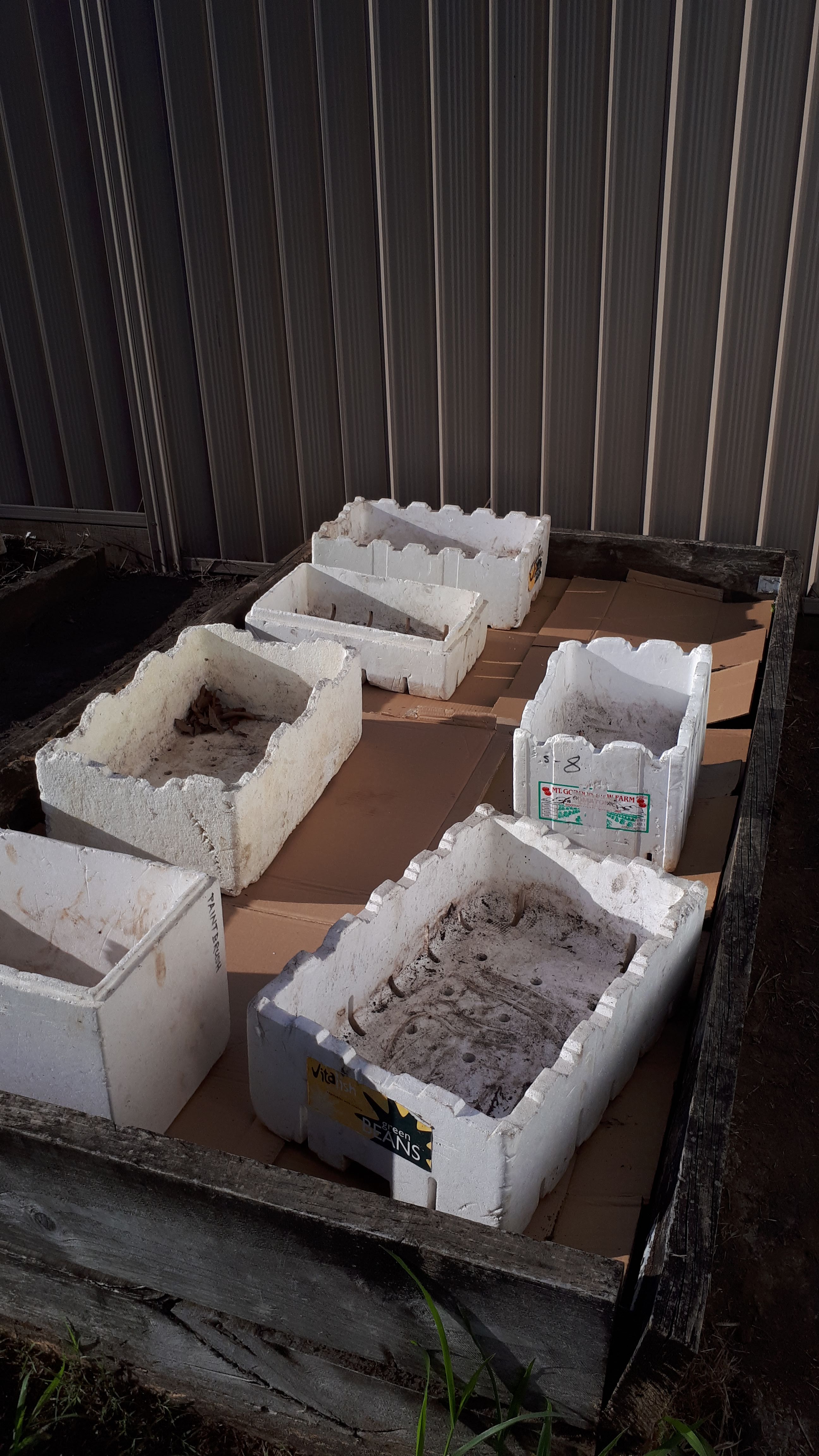
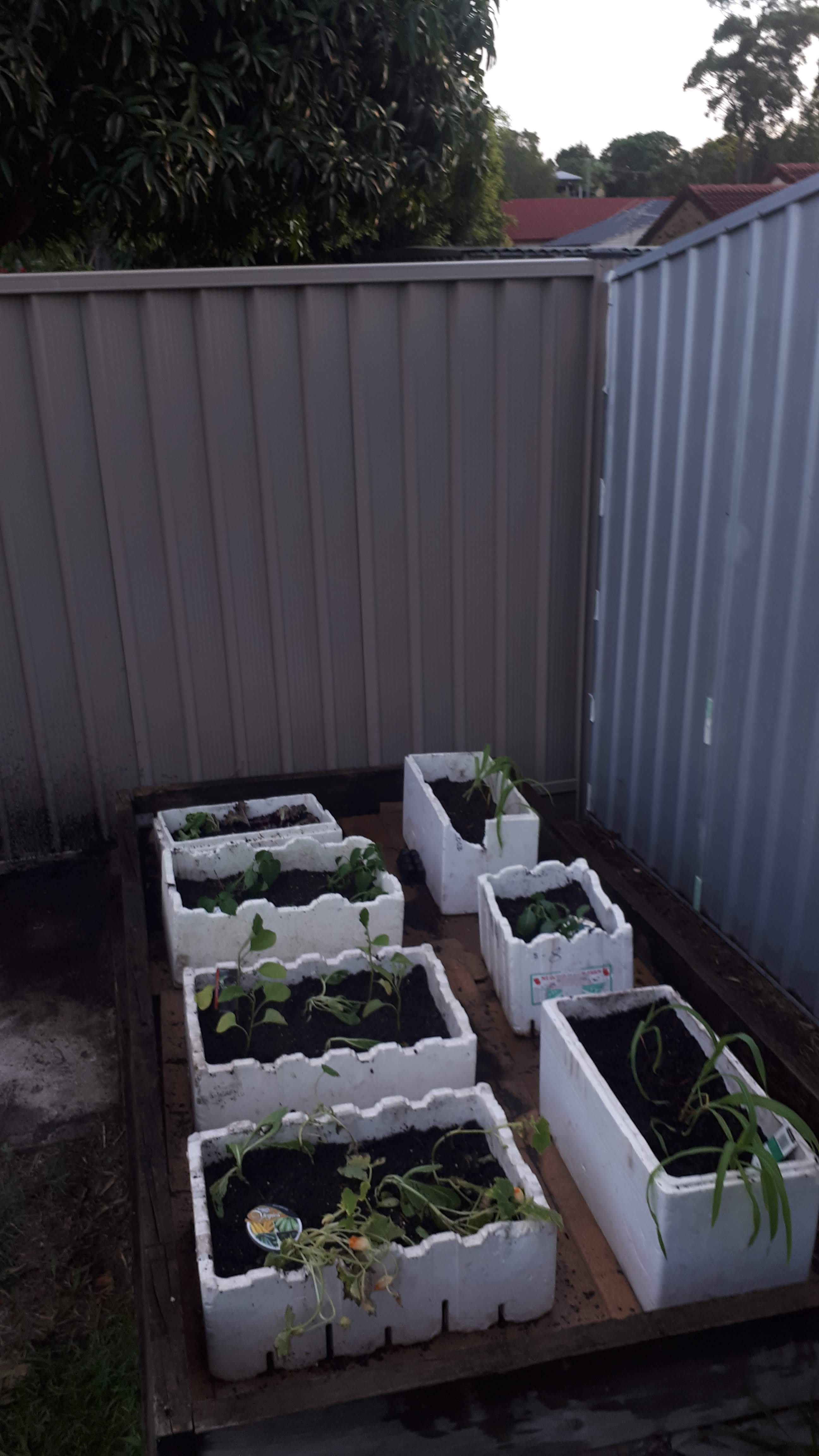
I started with corn, tomatoes, mini capsicums, eggplants, zucchini and an assortment of lettuces.
Renting in Australia lends an impermanence to life that can be stifling. It’s not like other countries where you can rent a place knowing that you can stay there as long as you need to and have the freedom to treat it as your home – hanging pictures, decorating, landscaping.
Some of the plants got too big for their boxes. Their roots breaking through the polystyrene and down into the soil of the garden bed.
I decided that I didn’t want to half live my life because I was renting so I transplanted all the plants to the garden beds and dispensed with the boxes.
Brisbane summers are brutal. I hate them. The sun fries you like a vampire who’s missed curfew and the humidity envelopes you like a hot, wet blanket, sapping your strength as you struggle for breath in the hot, moist air. I find the only way to keep a garden going is to garden in the cooler hours. I try to get up at around 5 when it’s just starting to get light and do a bit of gardening. Even if it’s hot and humid (which it can be at that time, night-time does not guarantee a reprieve from the horrid sub-tropical, swampy air), the sun isn’t out yet so it’s not unbearable. I’ll garden for a few hours, working until around 8am when the sun has made it above the shadow of the house and is now bearing down on me like an ant under a magnifying glass. If energy levels allow, I’ll come back in the afternoon when the sun has sunk behind the houses to the west.
Due to the CMT, I do most of my gardening sitting or kneeling, often having to sit in a wet garden bed to put up trellis’s and plant plants because I don’t have the strength or balance to do these things whilst standing or squatting, so I get very dirty. Like, legs, hands, arms and often my whole body covered in dirt, mud and the odd bit of chook poo. There’s no other way I can garden but I’m not afraid of getting dirty (I had my own mud puddle as a kid but that’s a story for another time!). Getting a tetanus shot is a good idea if you’re a gardener.
I have to be smart about my energy use. I’ve learned to listen to my body and set small tasks for myself. I can’t weed a bed, prepare the soil, plant seedlings, put up shading and insect protection all in one day. I have tried and ended up exhausted and useless for a week. In addition to that work there is the labour of carrying tools, fertilisers, bags of compost and soil from the shed and back again. This takes several trips and the walking alone is tiring. Most garden equipment heavy and it takes a great amount of my strength and energy just to lift it, let alone digging and turning the soil. I have a little wagon that I use to move things but I can’t pull a heavy load, so, although it’s easier than carrying things, it still takes effort. Therefore, I plan my steps methodically and carry them out over a few days.
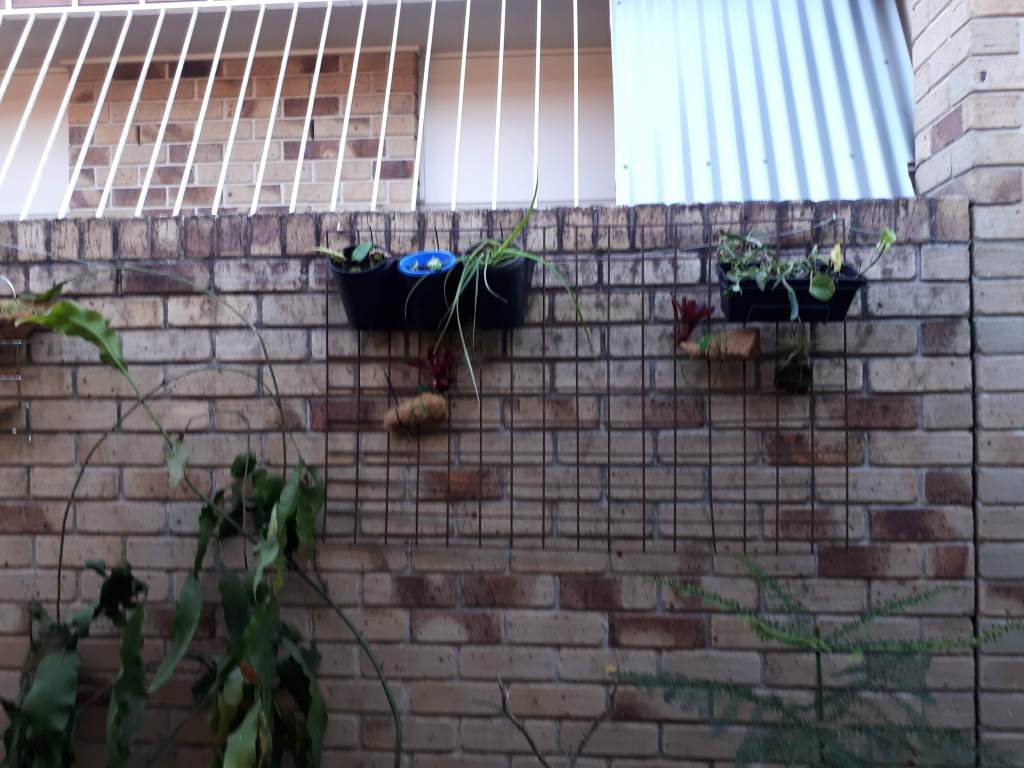
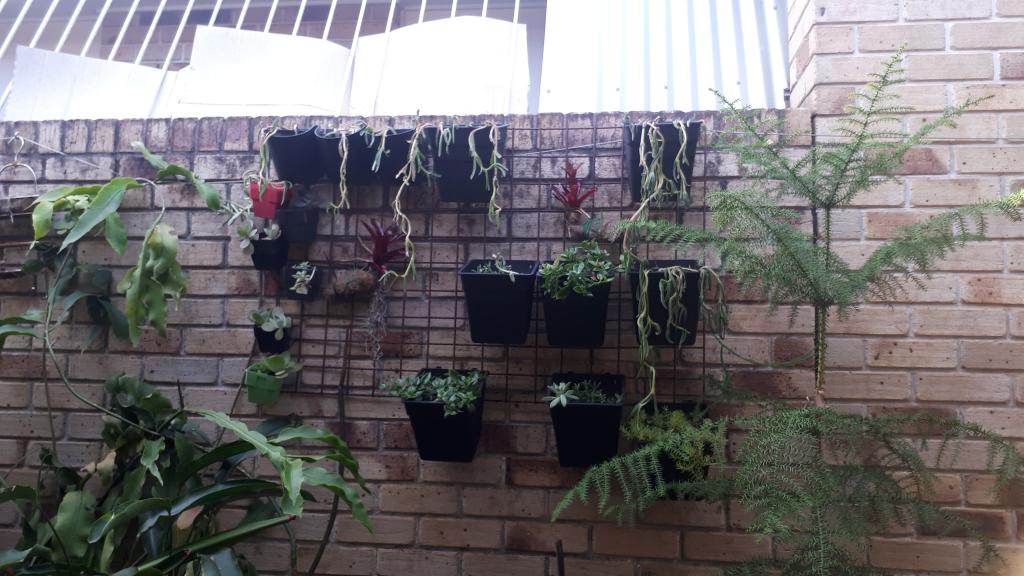
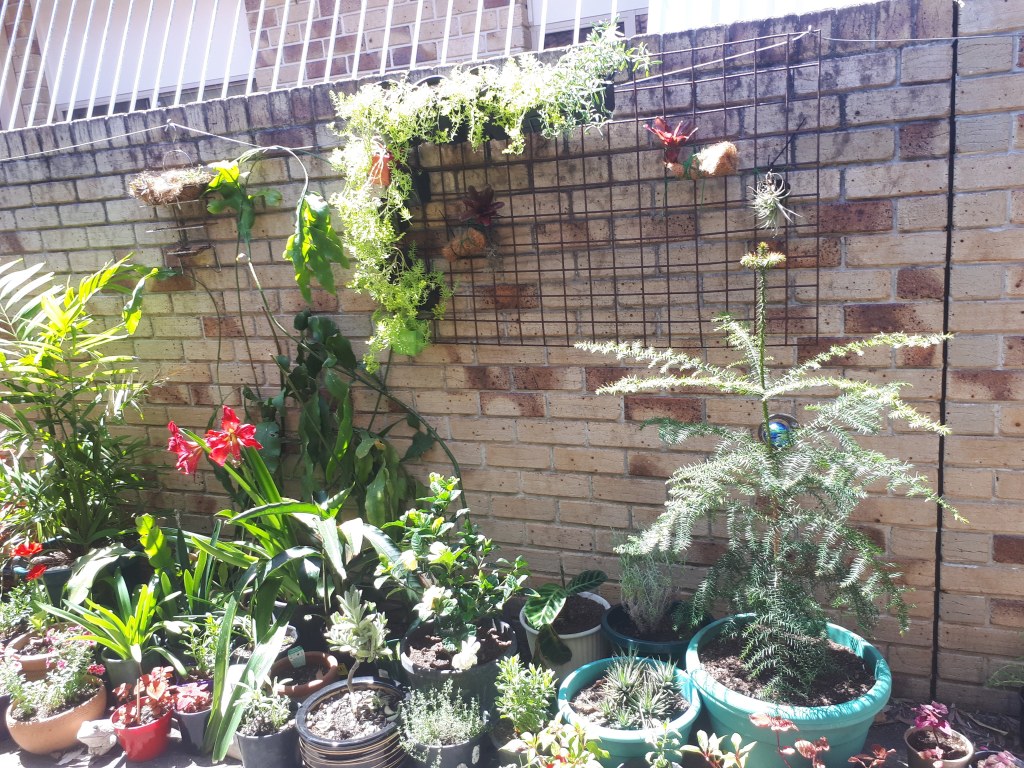
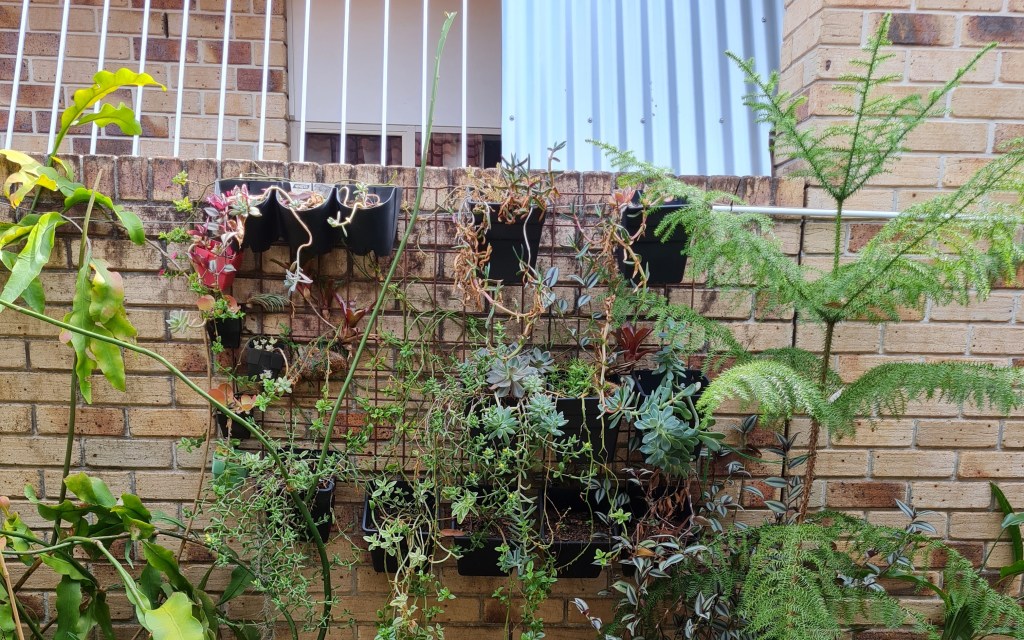
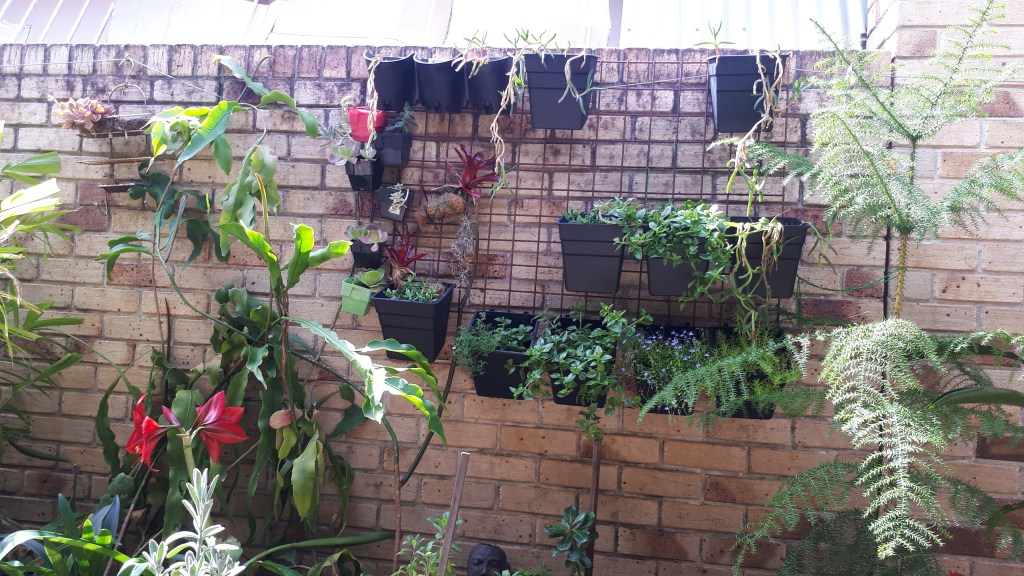
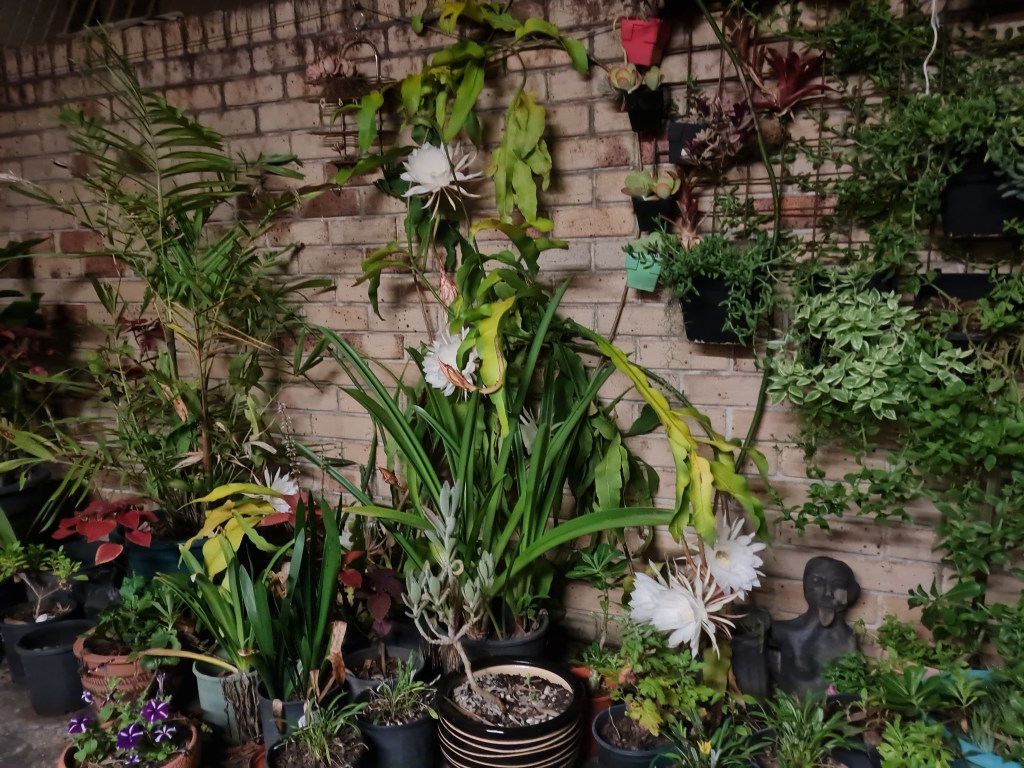

The garden shed had a step up which was slightly higher than an average step and was difficult for me to negotiate. I was able to use my National Disability Insurance Scheme (NDIS) funding to have a cement ramp built. It made a huge difference to my ability to garden safely and with more ease.
It’s also important in terms of managing the workload and conserving energy, to keep on top of weeds. It’s much easier to pull out a small plant than to tackle something that’s grown a trunk and is seeding everywhere!
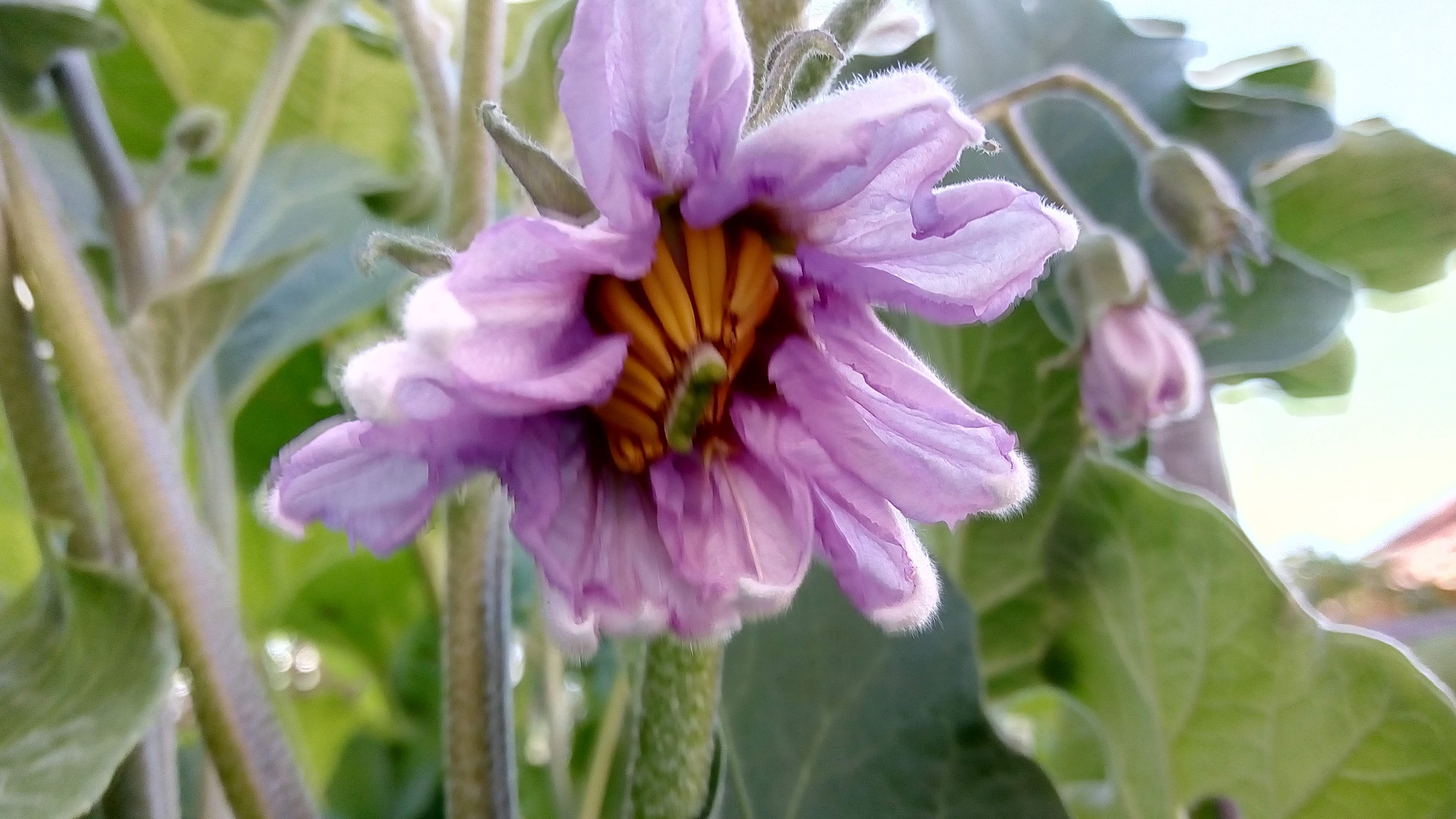
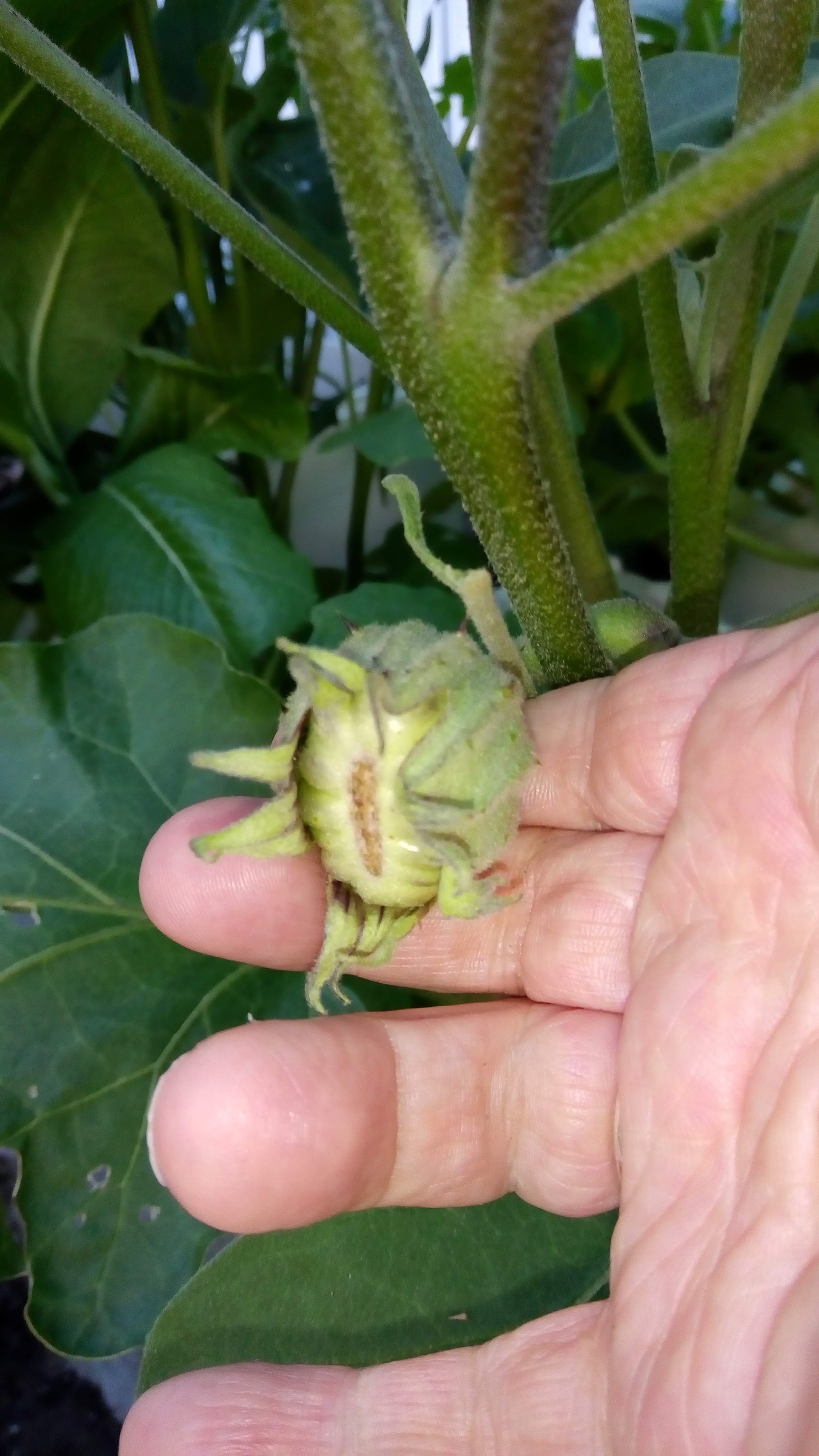
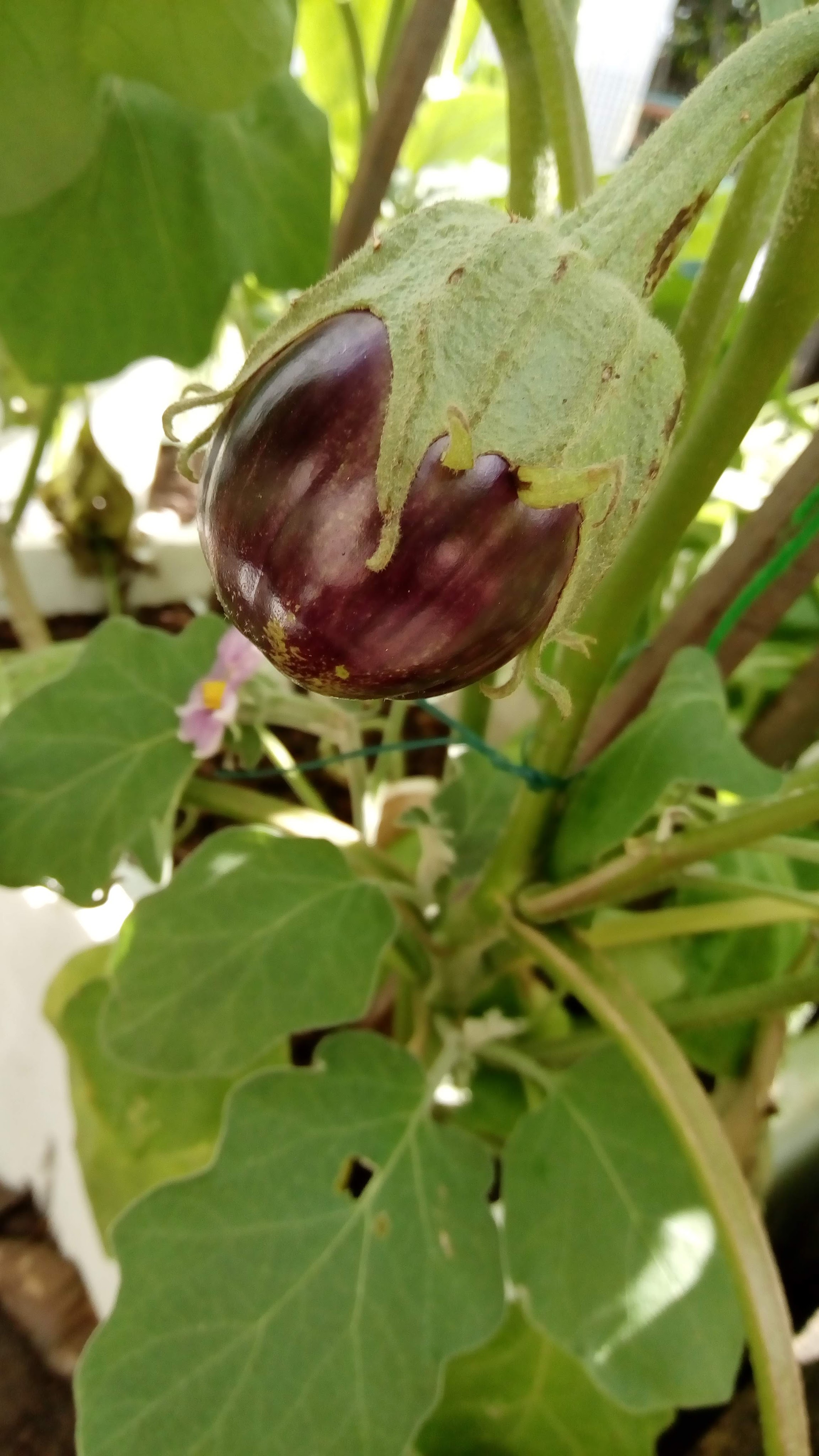
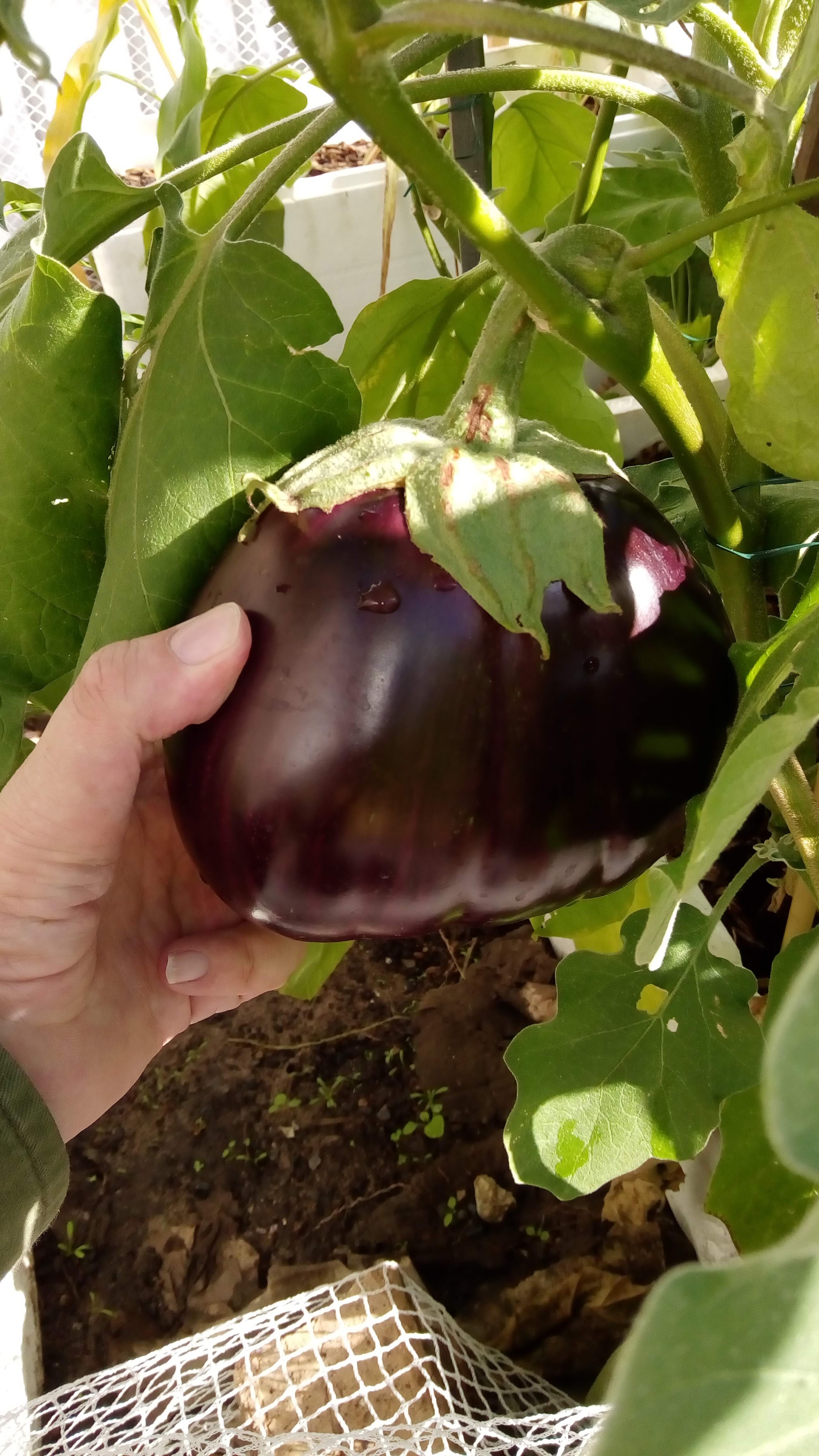
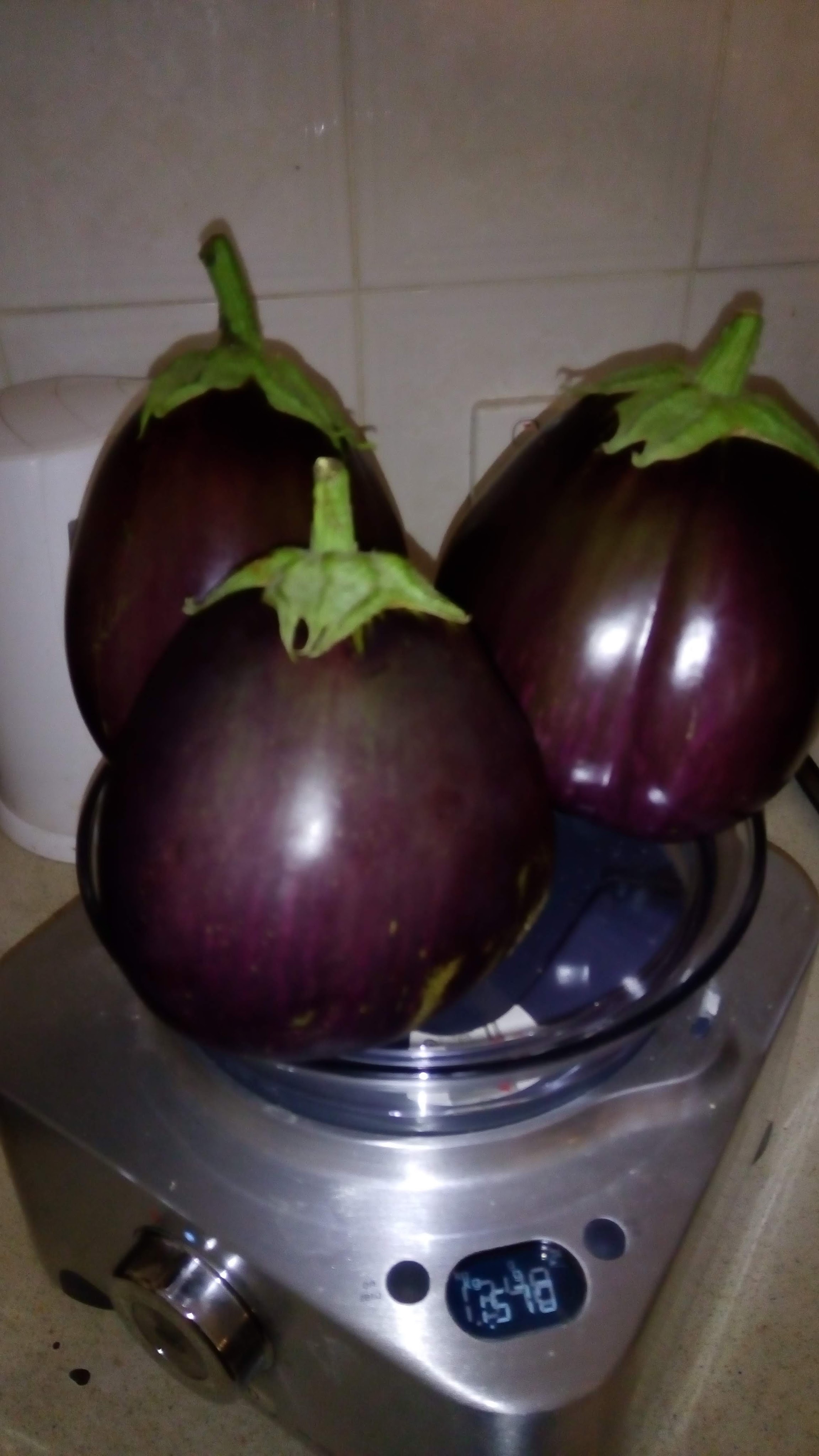
I had a bumper crop of eggplants, and mini capsicums last year. Having fresh produce to eat from your own garden is immensely satisfying. What we couldn’t eat, I pickled.
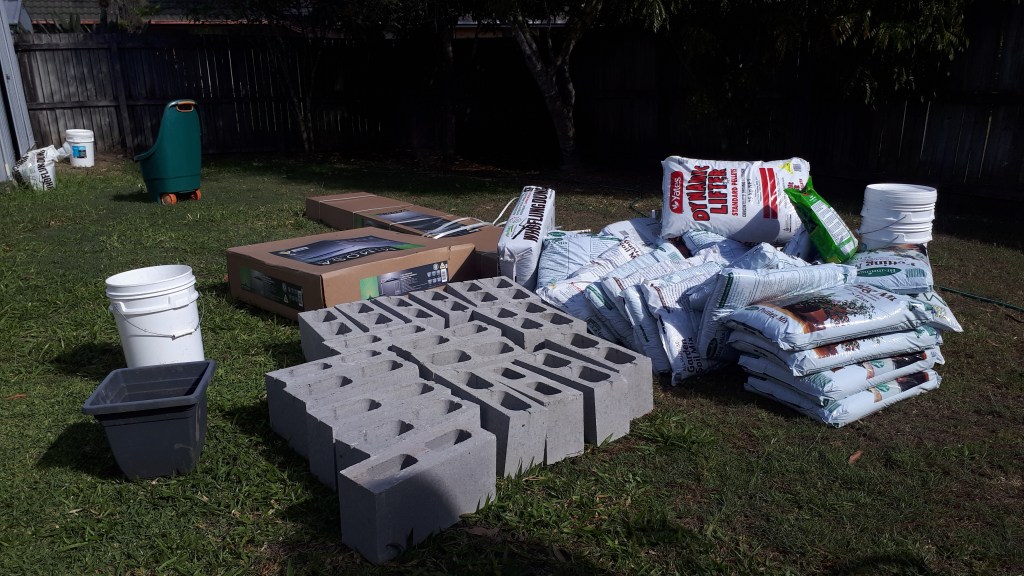
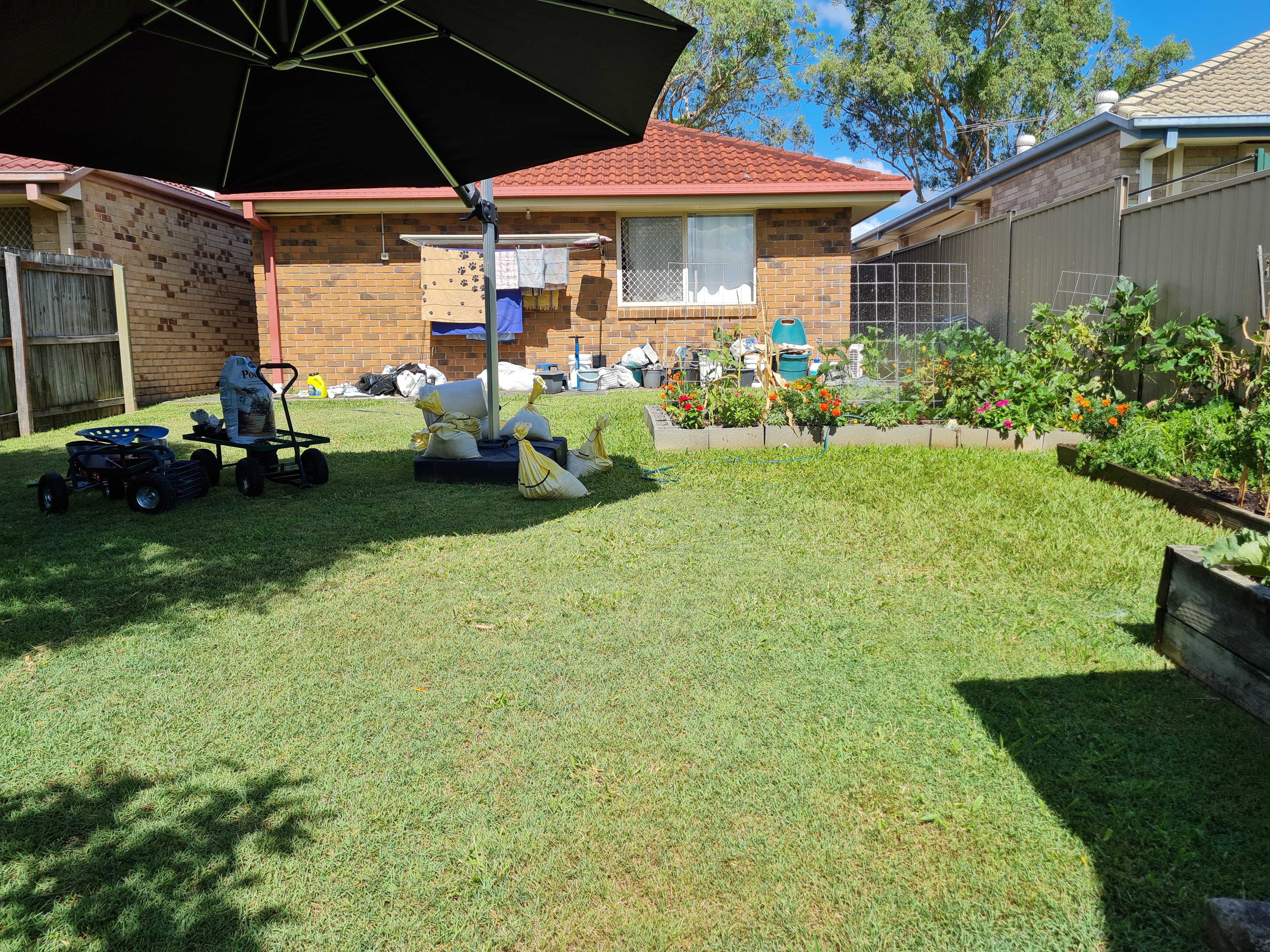
At the end of last year, I extended my gardening space by building a bed with bessa bricks. I call it the “top bed”. It was another herculean task as the delivery guy left the bricks at the side of the house and I had to take them a further 20 metres to the backyard. But I did it, one brick at a time, on my trusty little wagon.
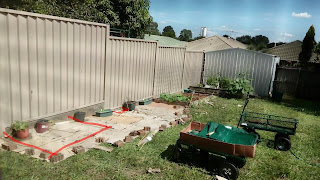
I set up the first variation of the top bed with the bessa bricks as the garden edging and planted spring onions, kale, carrots and radishes with gem squash in a smaller bed.

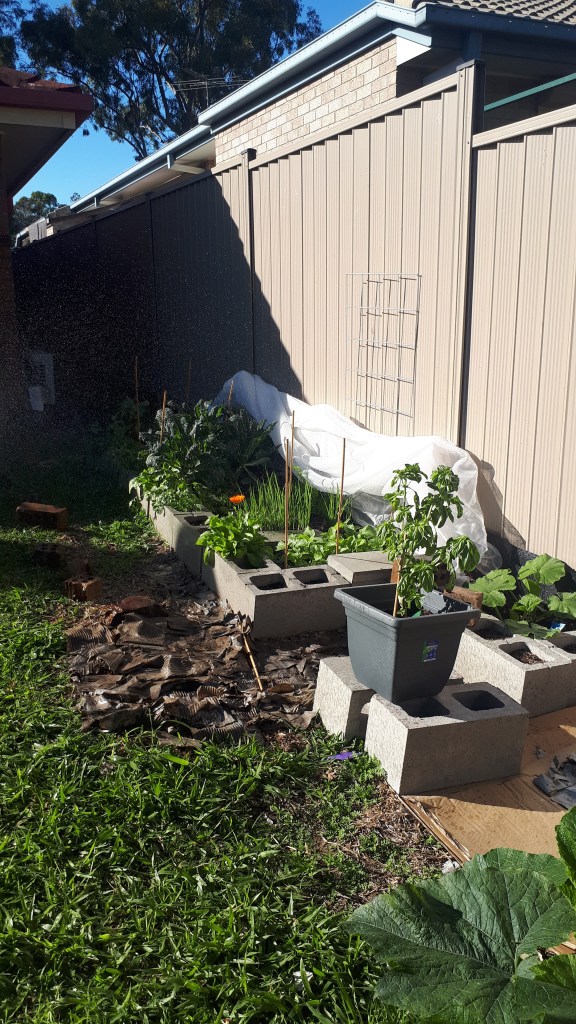
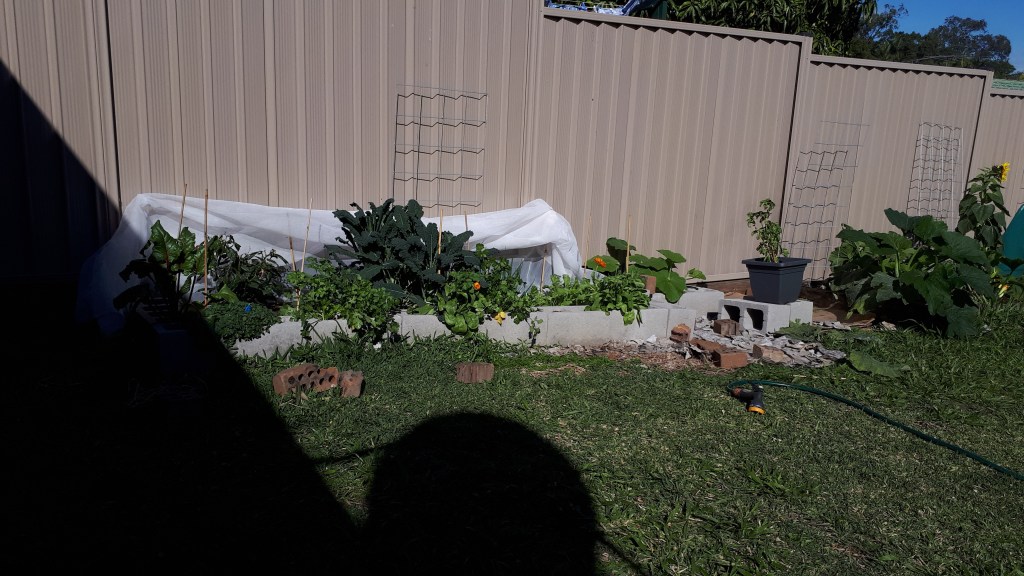
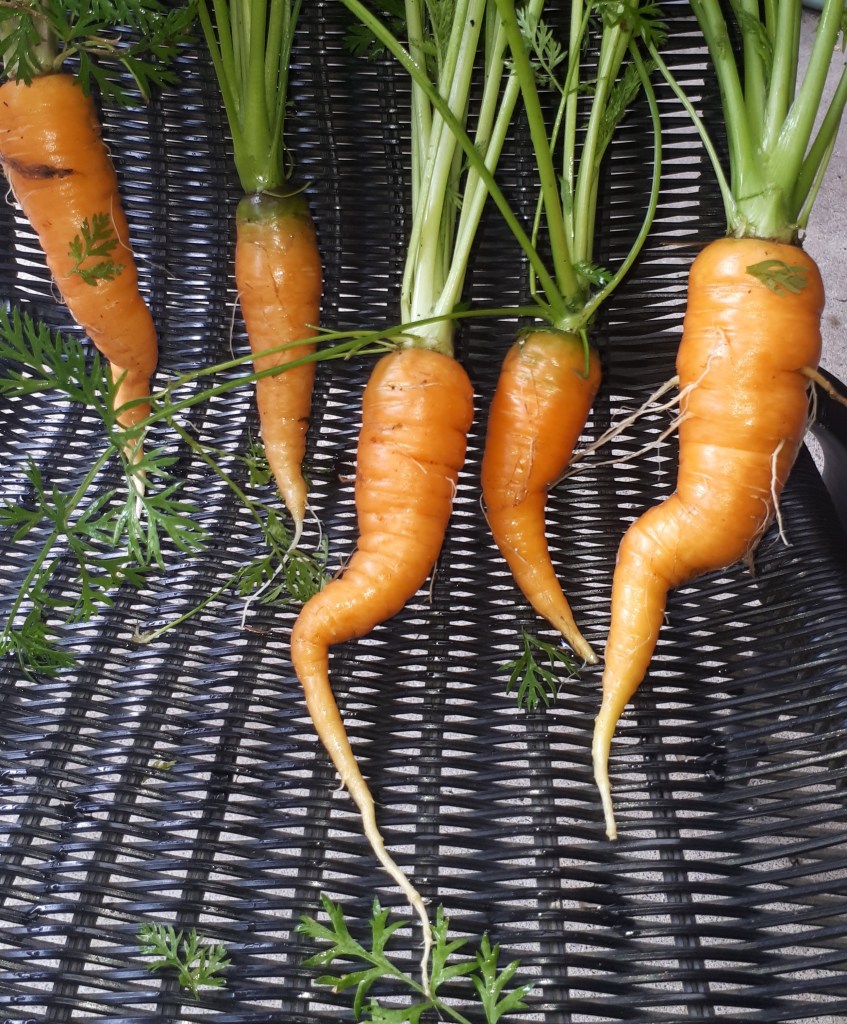
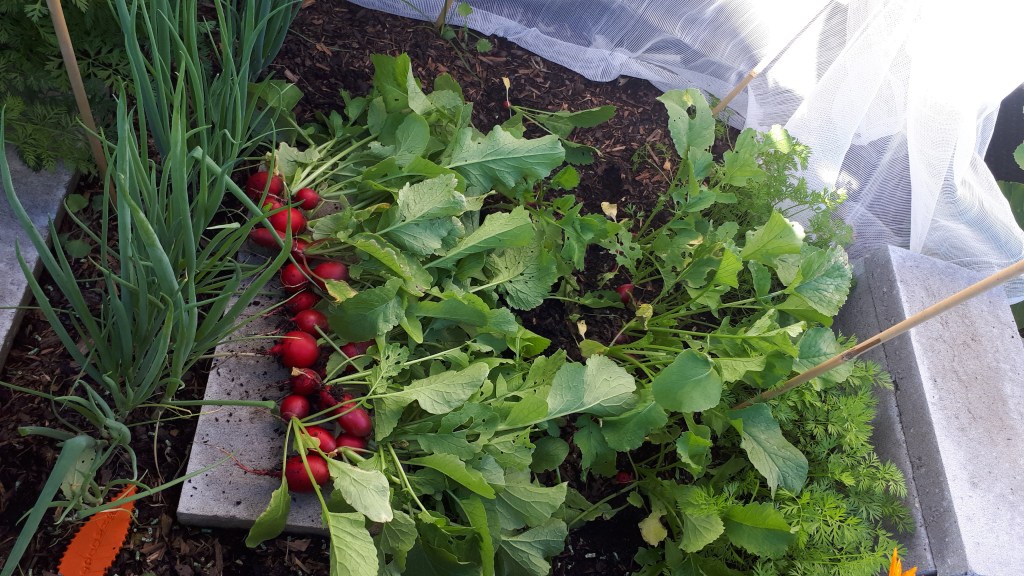
The soil in the beds was hard and clay like. It took too much effort to dig into so I built it up, adding a layer of soil and compost on top of what was there. You can see the depth of the topsoil in the above picture of the carrots. Where they have all started growing sideways and then down is where they hit the harder soil. Subsequent carrots were planted in a bed with a deeper layer of soft topsoil and they didn’t encounter this bending problem. Throughout this gardening journey, I have acquired knowledge through a mix of experience, trial and error and the knowledge of my parents and online gardening groups. It is something I am continuously improving and I’m always looking to learn more.
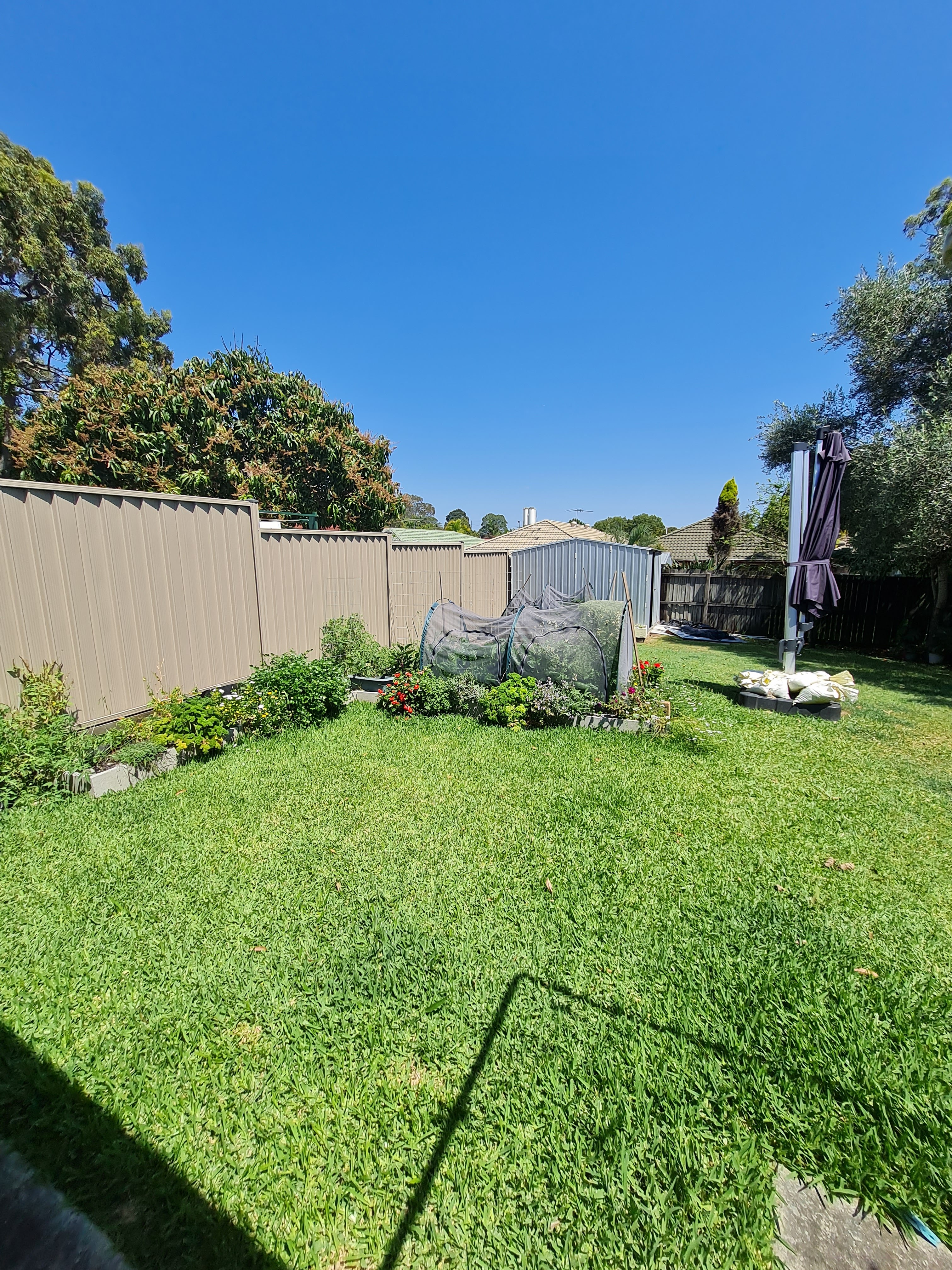
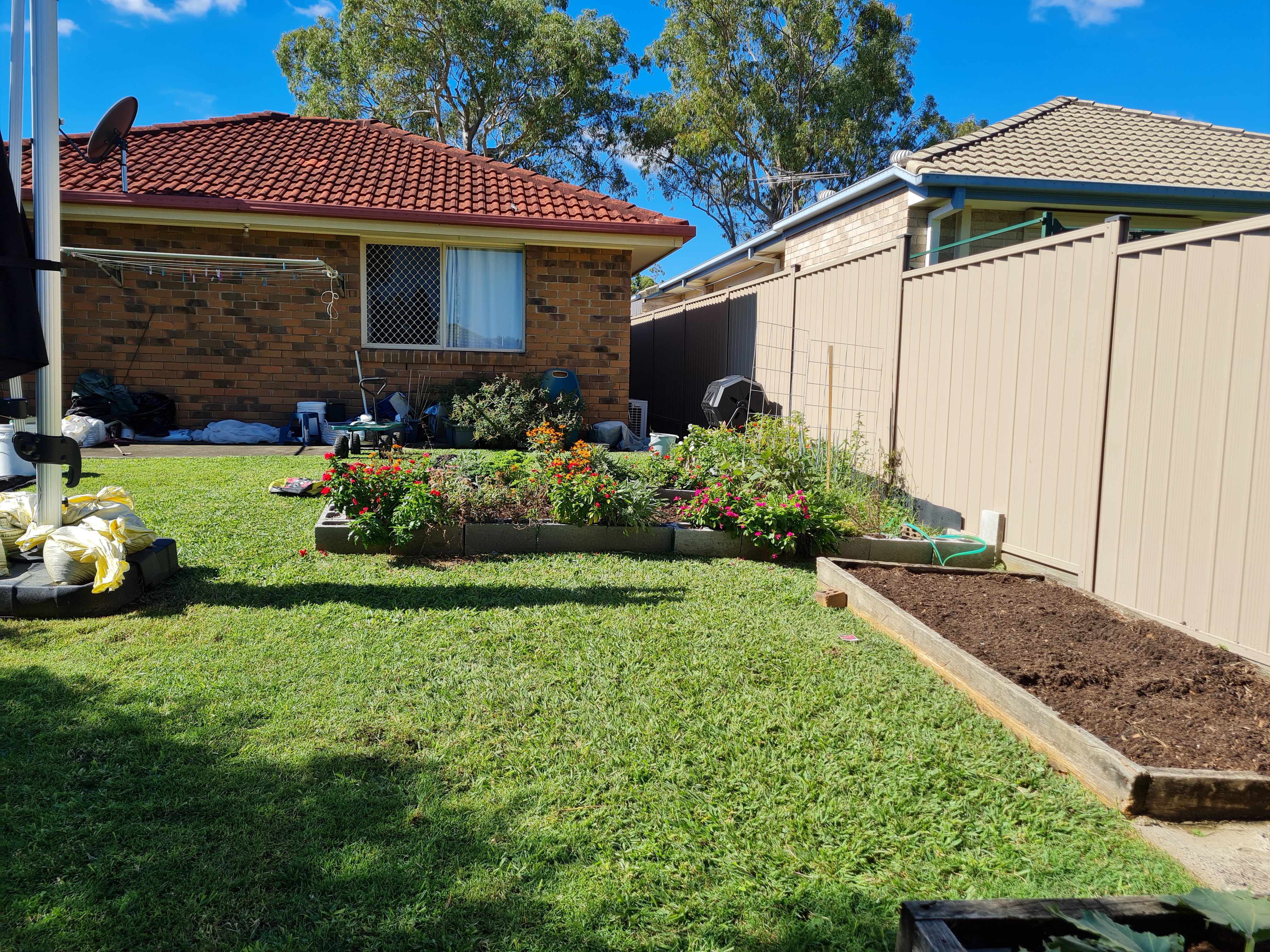
My gardening dreams quickly out grew the small brick beds I had created so I joined them all together and extended a long bed into the yard. I refer to this as the “top bed”. I have the top bed (which has two sections; The fence section and the yard extension), the middle bed and the bottom bed. I planted cucumbers, corn, bush beans and gem squash in the yard extension of the top bed.
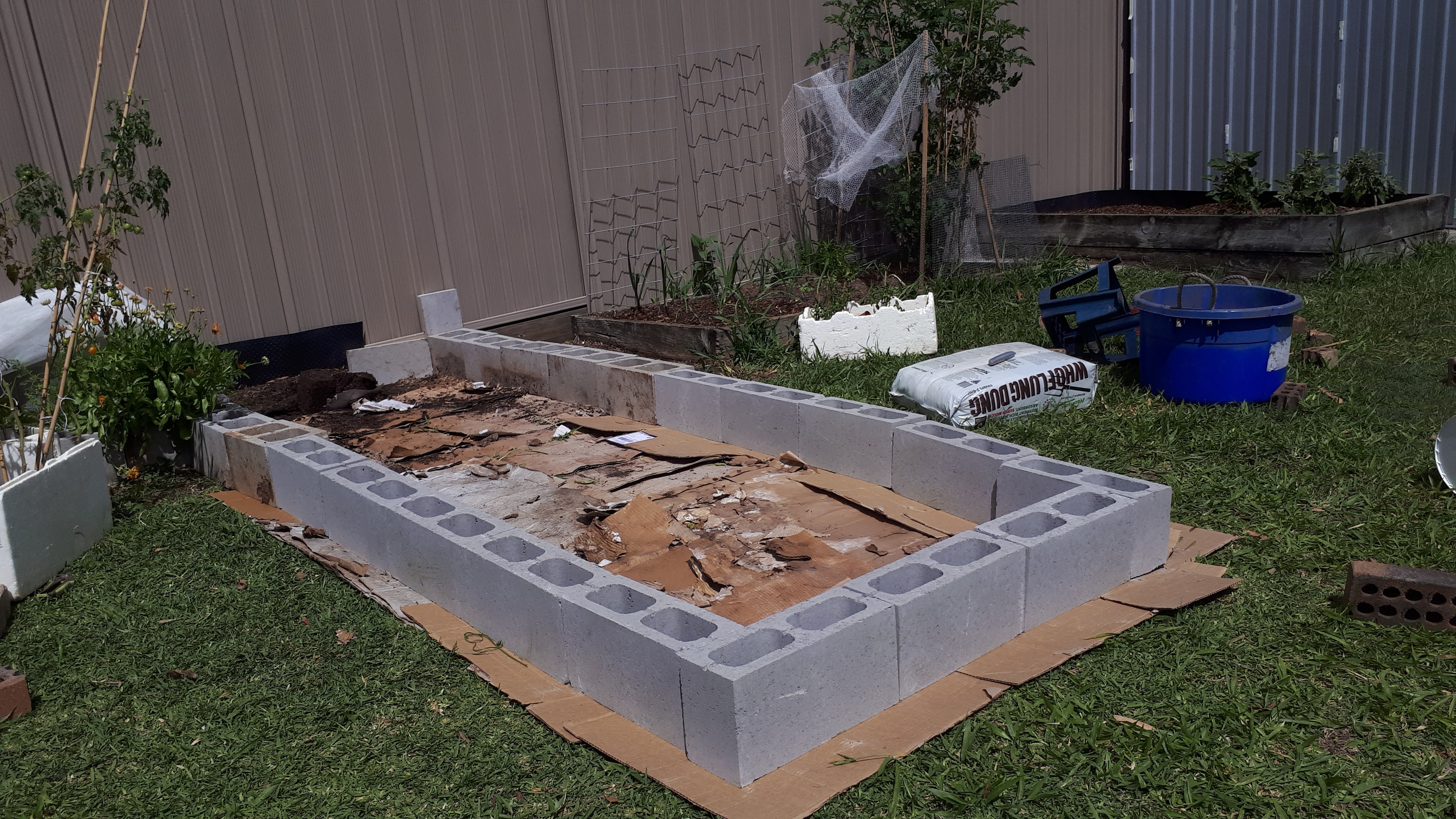
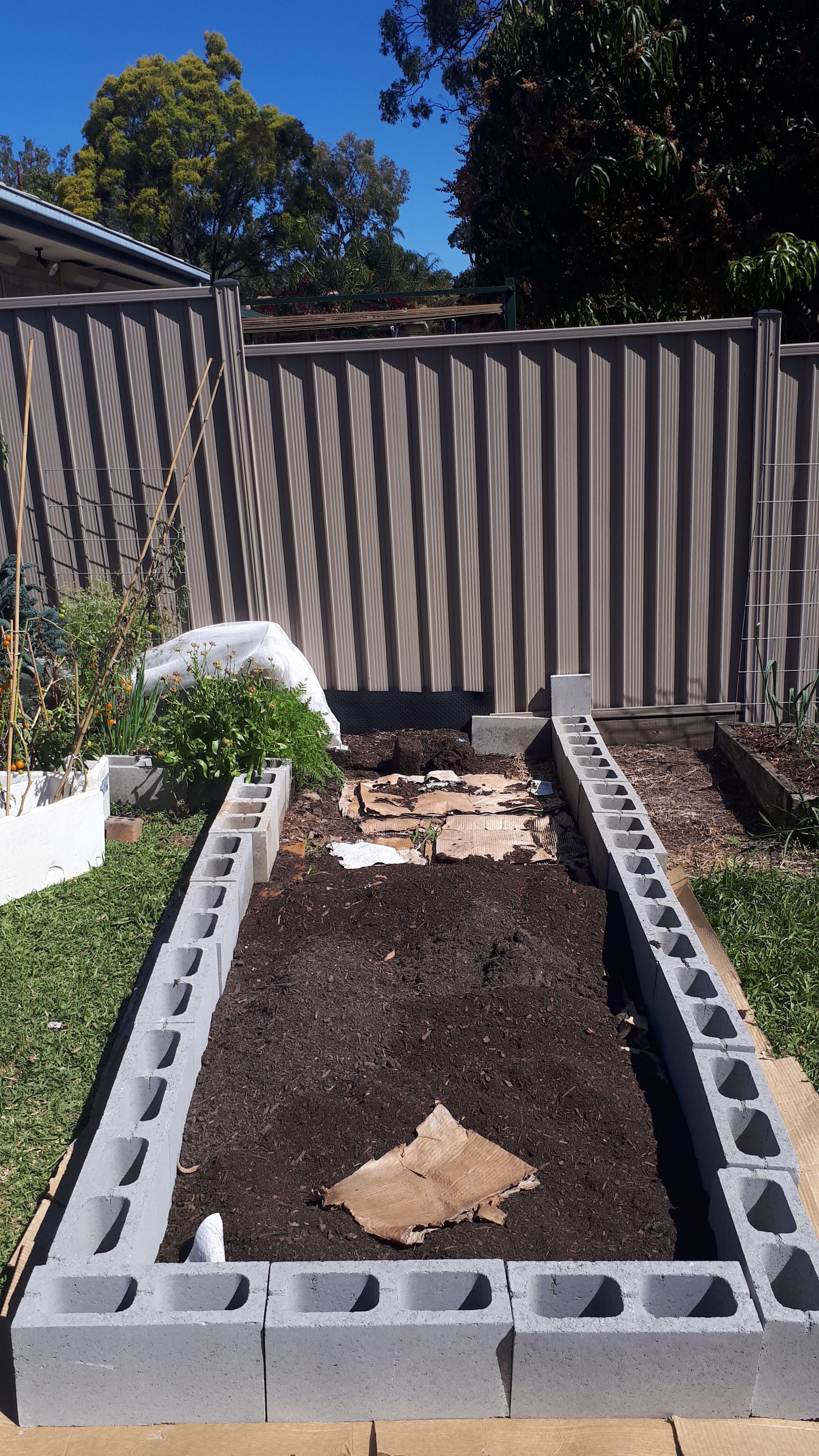

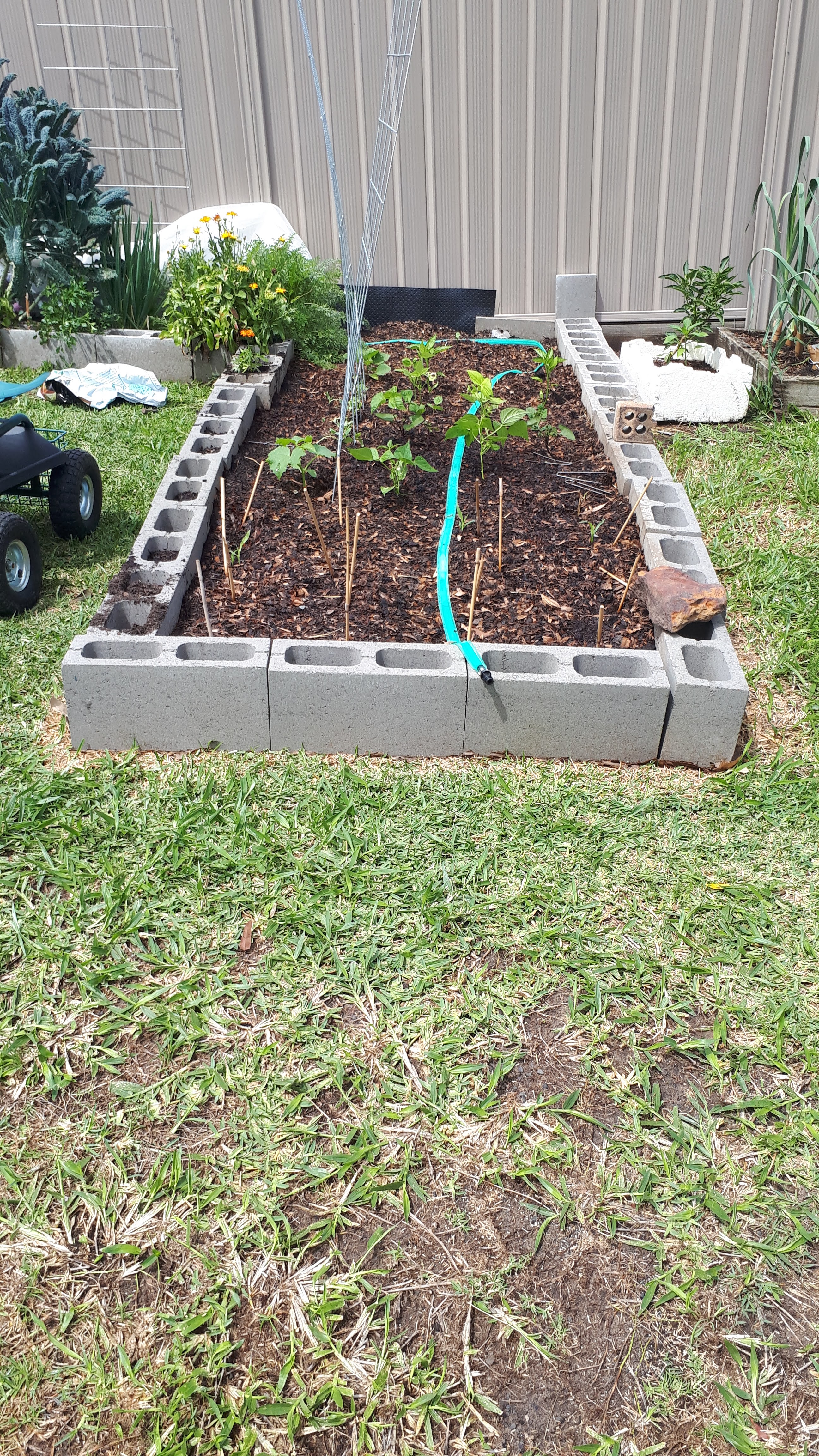
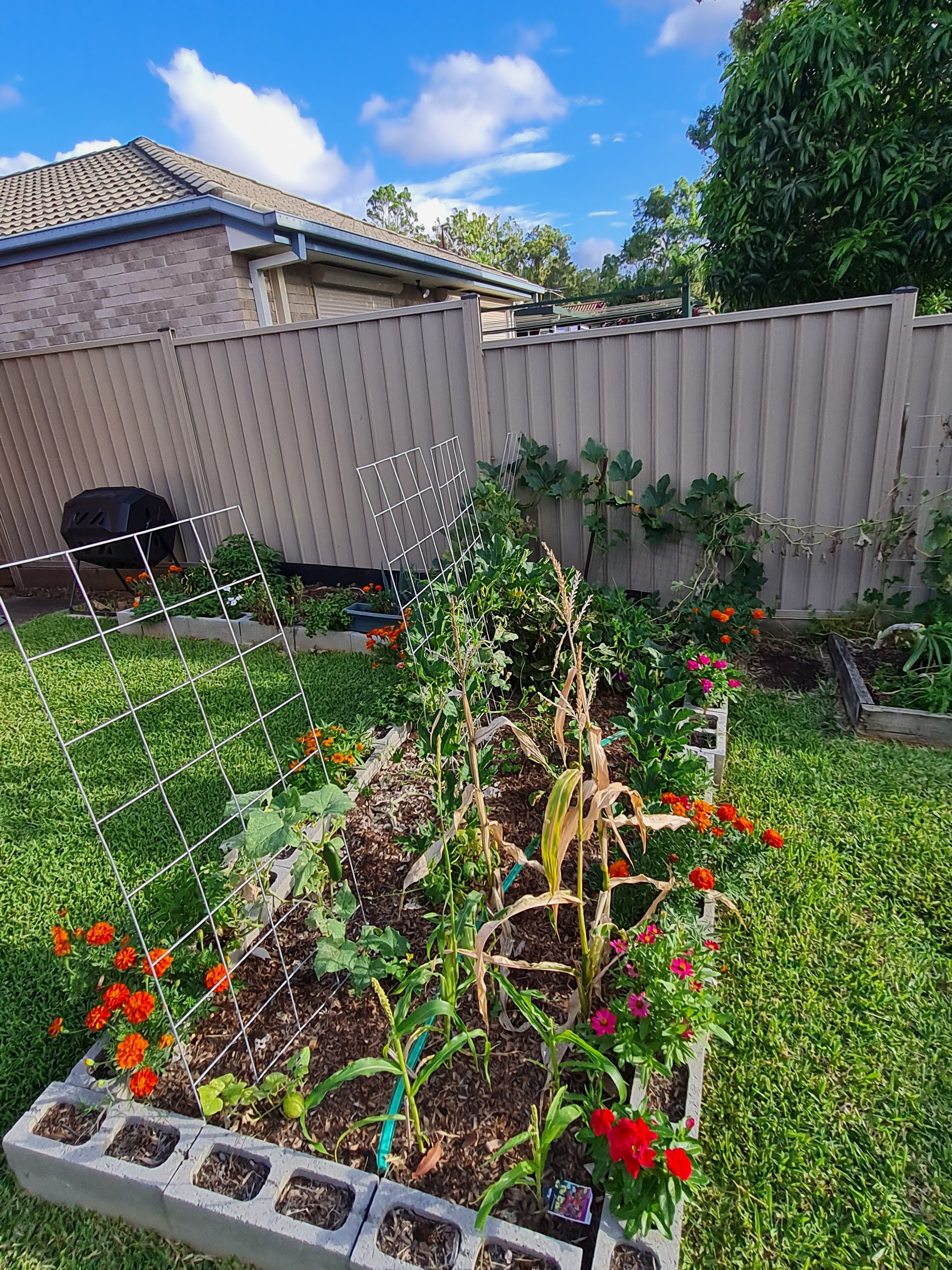
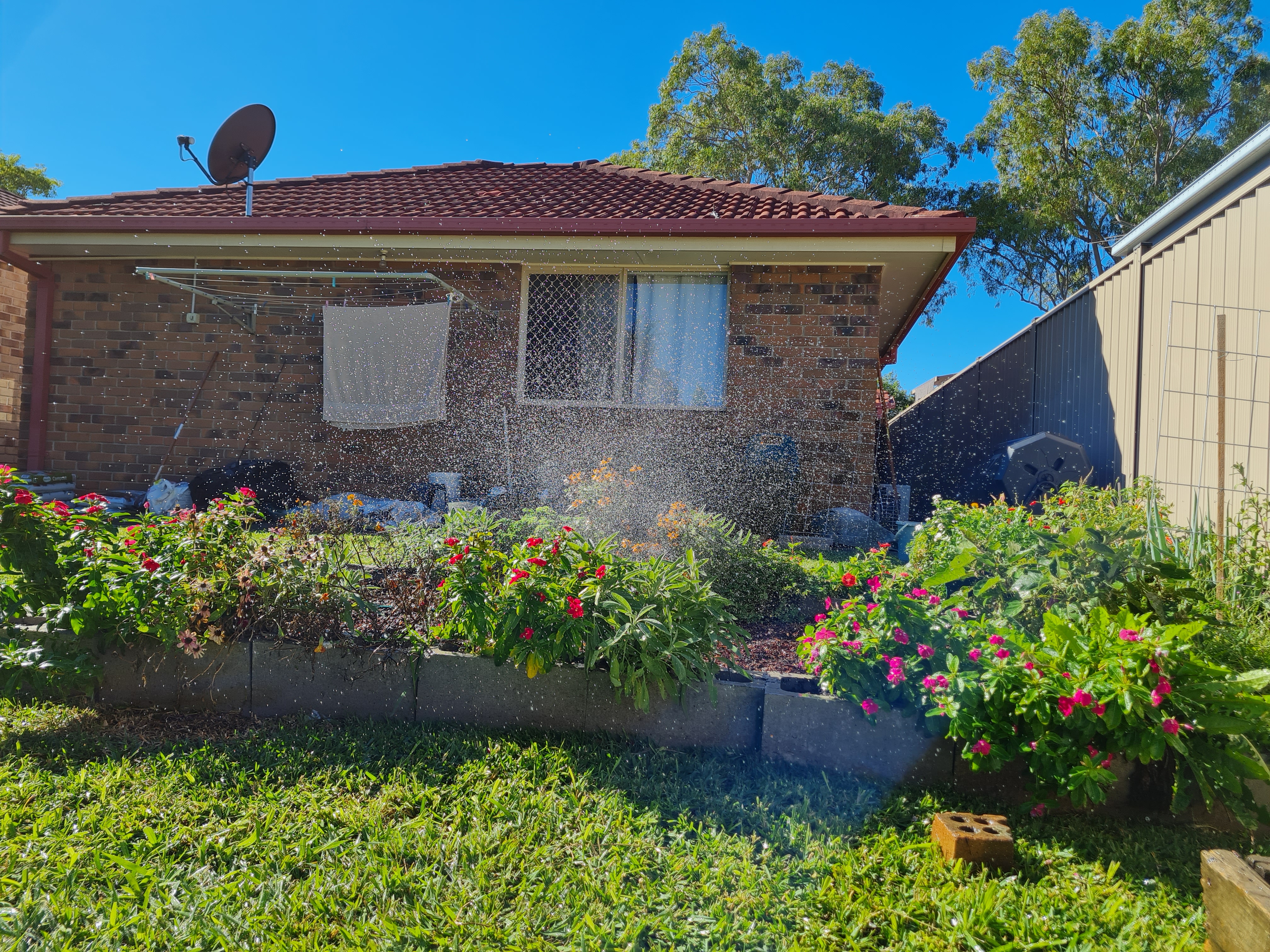
The holes in the bricks were an excellent place to plant herbs and flowers.
This year, with the cucumbers and corn finished, I planted silver beet, spinach and rocket in the yard extension of the top bed. I dug the remaining bush beans back into the soil. They sprouted new bushes from the dug in seeds and I got surprise beans which have done quite well.
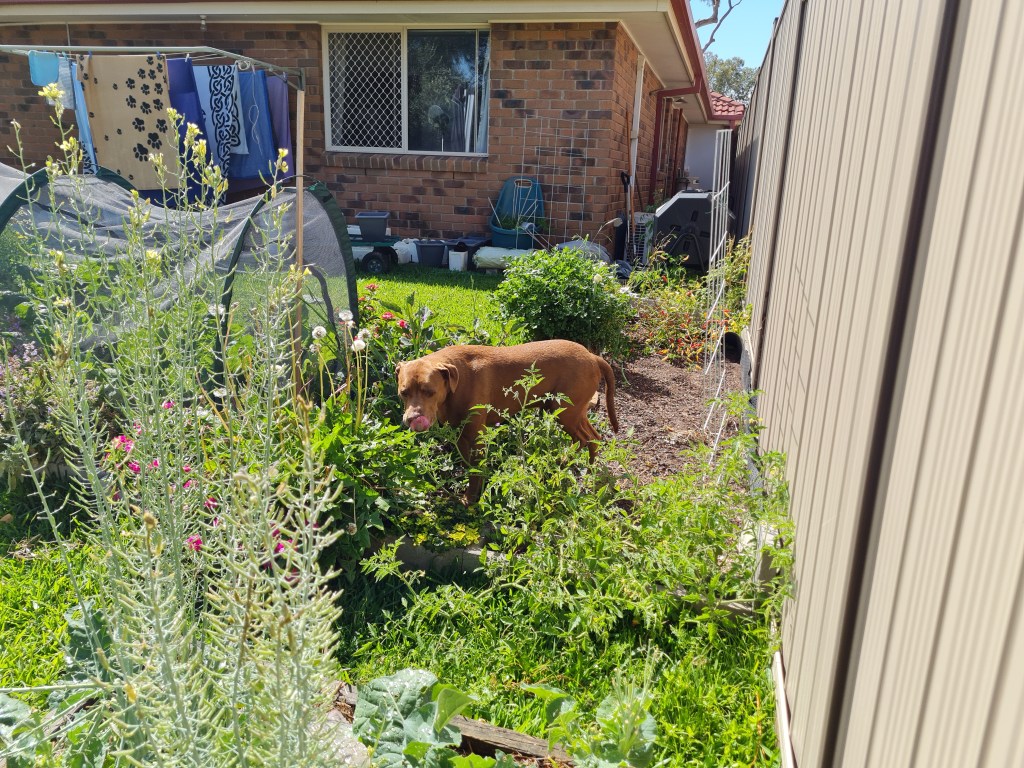
Most of the top bed fence section is where Billy dug his sunbaking hole (the bare patch behind him), so I lost the area where I grew kale and spring onions. But I’d rather see him blissing out in the sun, so I don’t mind.
It took a while for the silver beet and other greens to take off because I didn’t have an effective critter barrier and they got savagely chomped by possums and grubs. I found some excellent garden covers (https://www.bunnings.com.au/maze-garden-cover-2m-net-tunnel_p3321484?store=8175&gclid=Cj0KCQjw-4SLBhCVARIsACrhWLWg1fv_cIv62d1nj8TNfqkyEHCcvnhaK3qxSgOf2EoW6uSQaycwSL4aAj-lEALw_wcB&gclsrc=aw.ds ) which I was able to put up by myself in the space of one morning. Once the plants were protected, they took off and just keep growing and growing. I love having a constant supply of silver beet on hand.
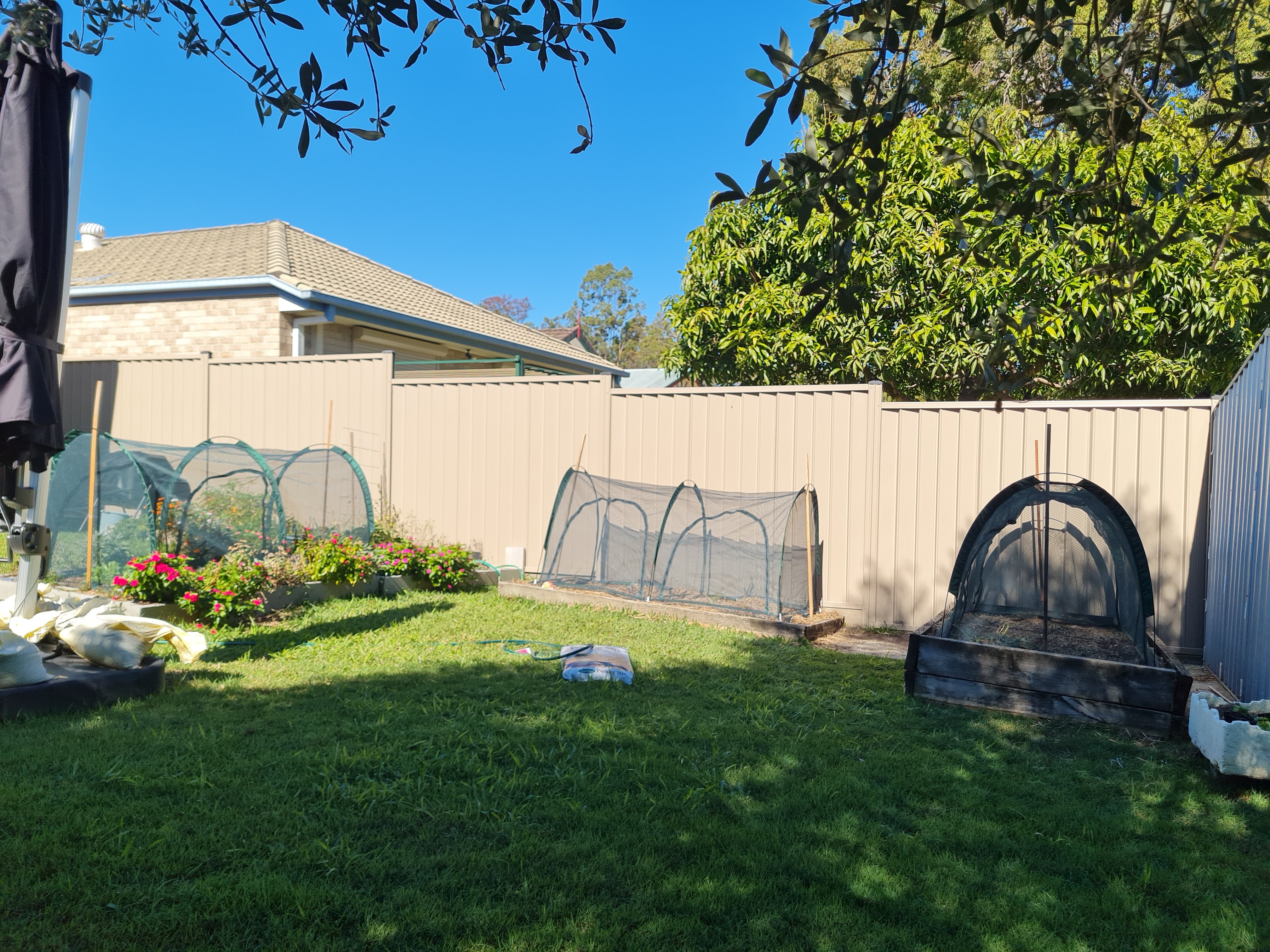
I planted brassicas (cabbage, cauliflower, kale and broccoli) in the middle bed in Autumn. Hoping that the winter would be cold enough to support these cold weather vegetables. Unfortunately they got decimated by cabbage moths and other critters before I got the chance to cover them and then once covered, they didn’t have much of a chance to get going before the weather warmed up and they bolted and turned to seed. I did get a little bit of baby broccoli and one smallish cabbage so it wasn’t a total loss.
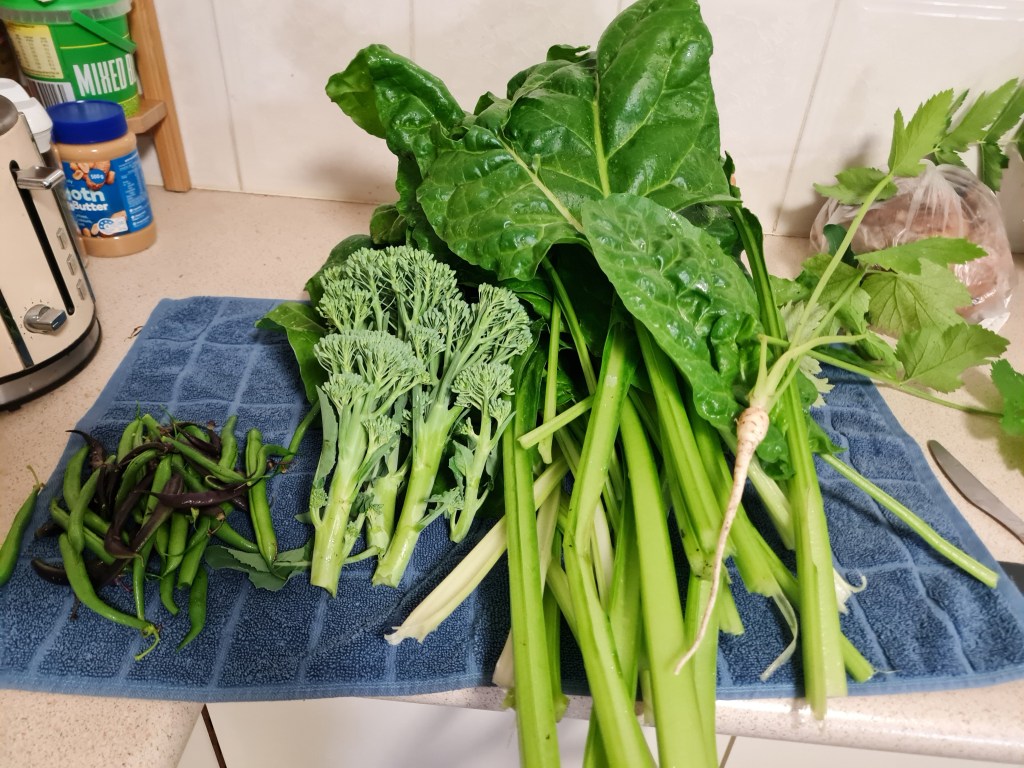
I have been thrilled with the produce I have grown and I’ve been able to share it fresh and pickled with my family. However, one of the most cherished things I have grown in my garden is calf muscles!!
CMT causes muscle wasting and I have tiny little, almost nonexistent calves. From the way I was gardening – sitting in a swivel garden seat, using my calf muscles to turn myself in the seat – I developed slight definition in my calves. These muscles gave me a major sense of accomplishment and I was showing them off to everyone!
My garden has been the doorway to showing me my strength – mental and physical. Showing me that if I give myself time and have patience, I can do things I never thought possible. It is also a calming, meditative practice. Just me, my garden and my thoughts. Creatively working around barriers that pop up and surprising myself with what I can do. I think of gardening as a promise for the future. It is an effective antidote to depression because it gives me things to look forward to in budding flowers and nutritious food. One of the most rewarding aspects of my garden is when I’m sitting, listening, immersing myself in it and a bee comes to visit a flower and I know that my efforts have effects far beyond my own needs.
 Peppa's Place
Inspiring article Chris
LikeLike